STATANLY RESIDENTIAL ANALYTICS

AI platform for residential utilities and housing complexes

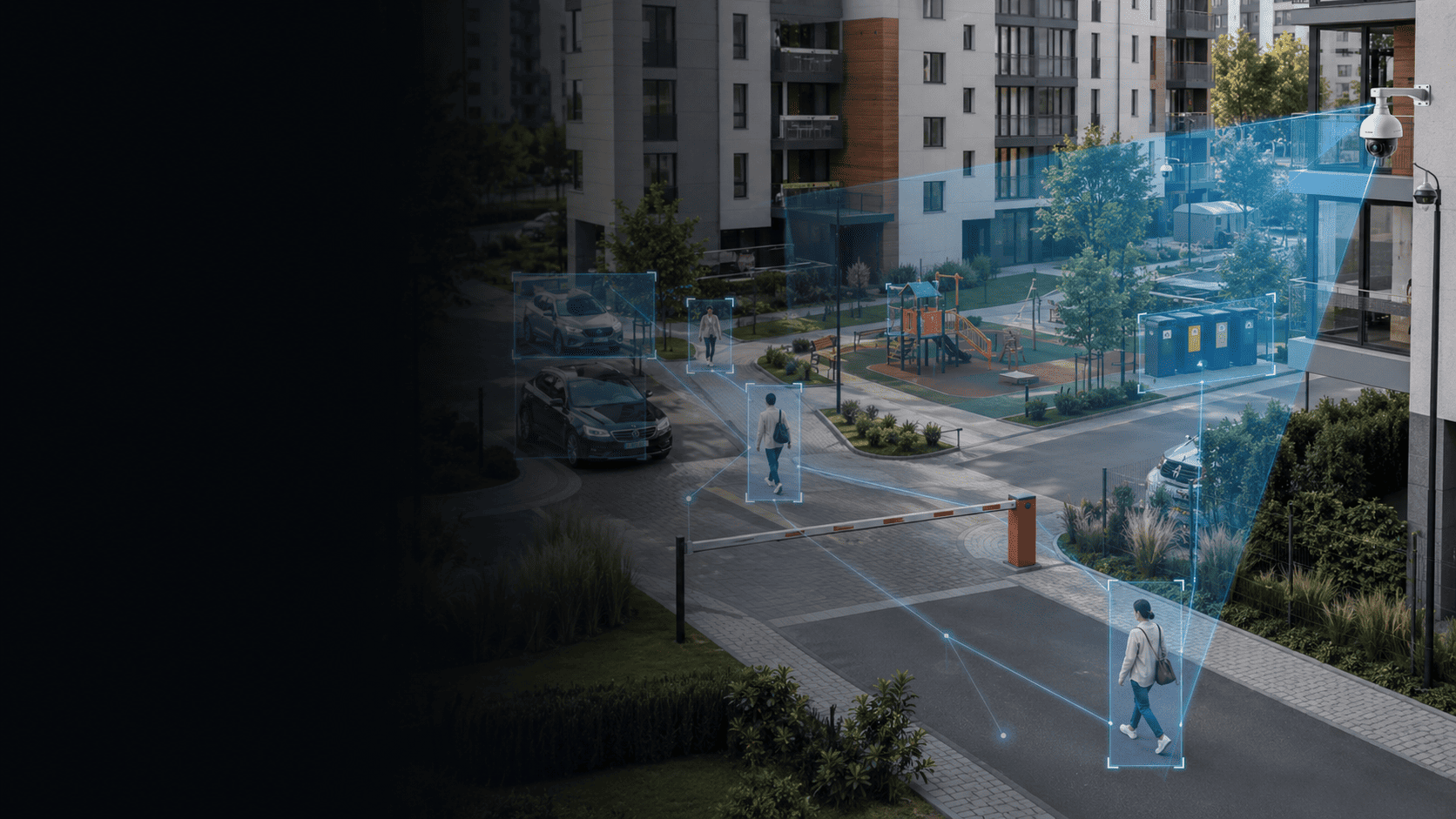
Computer vision for courtyards, entrances, waste areas, driveways, lighting, amenities and events across residential sites.

24/7events, frames and evidence without manual archive review
courtyardspeople, vehicles, playgrounds, recreation areas and suspicious objects
wastecontainers, fill level, overflow, pickup schedule and violations
roadsroads, parking, blocked passages, surface condition and emergency access
accessautomated barrier, plates, authorized lists and passage archive
control centersite map, events, notifications, contractors, reports and KPIs
Challenge

A residential site must be visible as a managed operation

Cameras already cover courtyards, entrances, waste areas, roads and access points. Video analytics turns the stream into events, statuses, notifications and clear tasks for management companies and contractors.

Courtyards and events

Gatherings, unattended objects, rule violations, hazardous zones and entrance events are hard to monitor manually.

Waste container areas

Overflowing bins, waste piles, damaged containers and disposal violations quickly become resident complaints.

Roads and driveways

Blocked passages, surface defects, unsafe parking and restricted emergency access require fast visual evidence.

Lighting and amenities

Dark zones, damaged assets, graffiti and unclean areas should be noticed before mass complaints.

Core AI modules

Modules for courtyards, residential complexes and management companies

Scenarios can be launched step by step: events and waste first, then roads, lighting, automated access and a unified control center for the site network.
Courtyards, entrances and peopleCourtyards and events

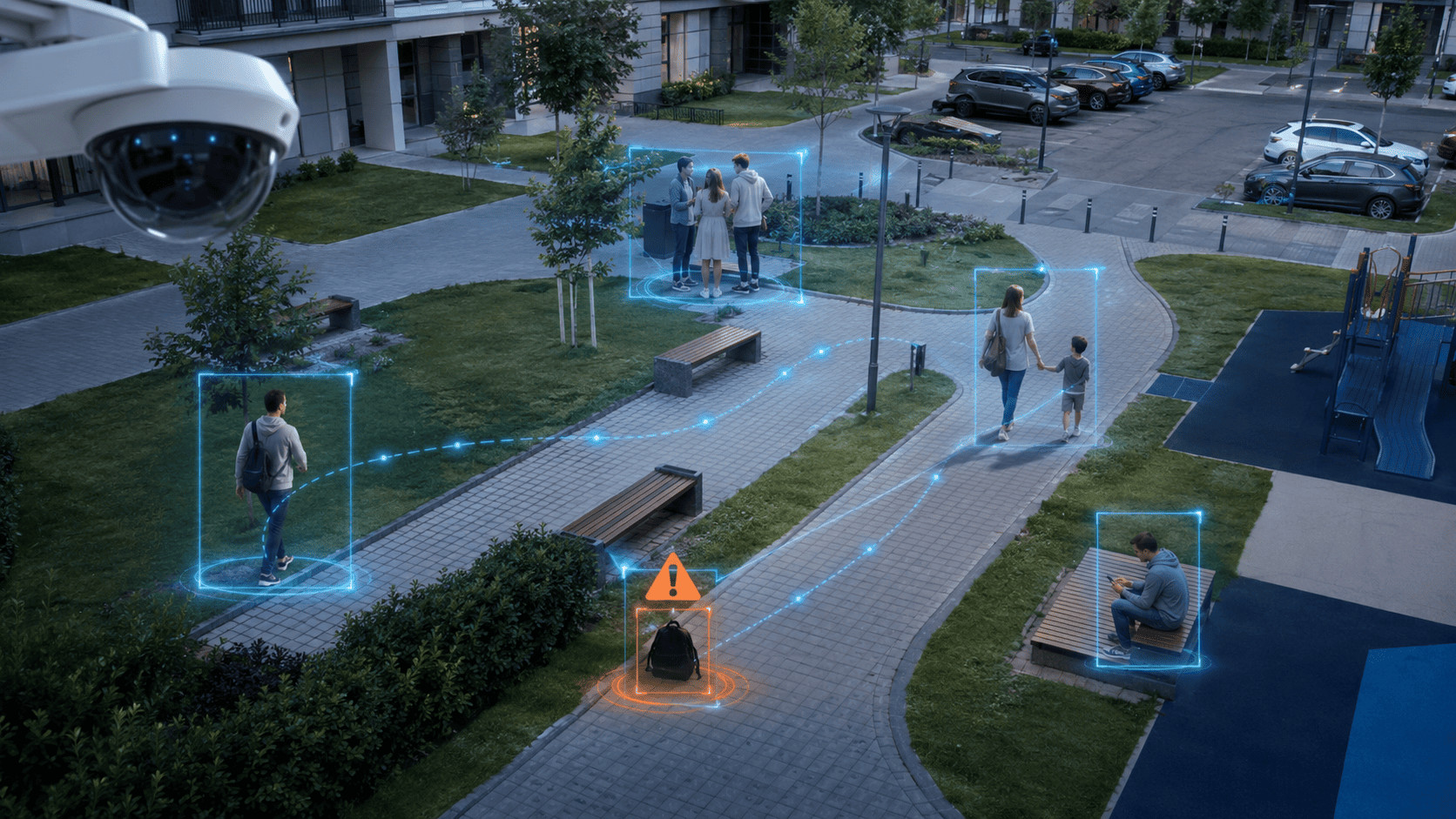
Courtyards, entrances and people

Events near entrances, playgrounds, courtyards, recreation areas and resident routes.
Waste handling controlWaste

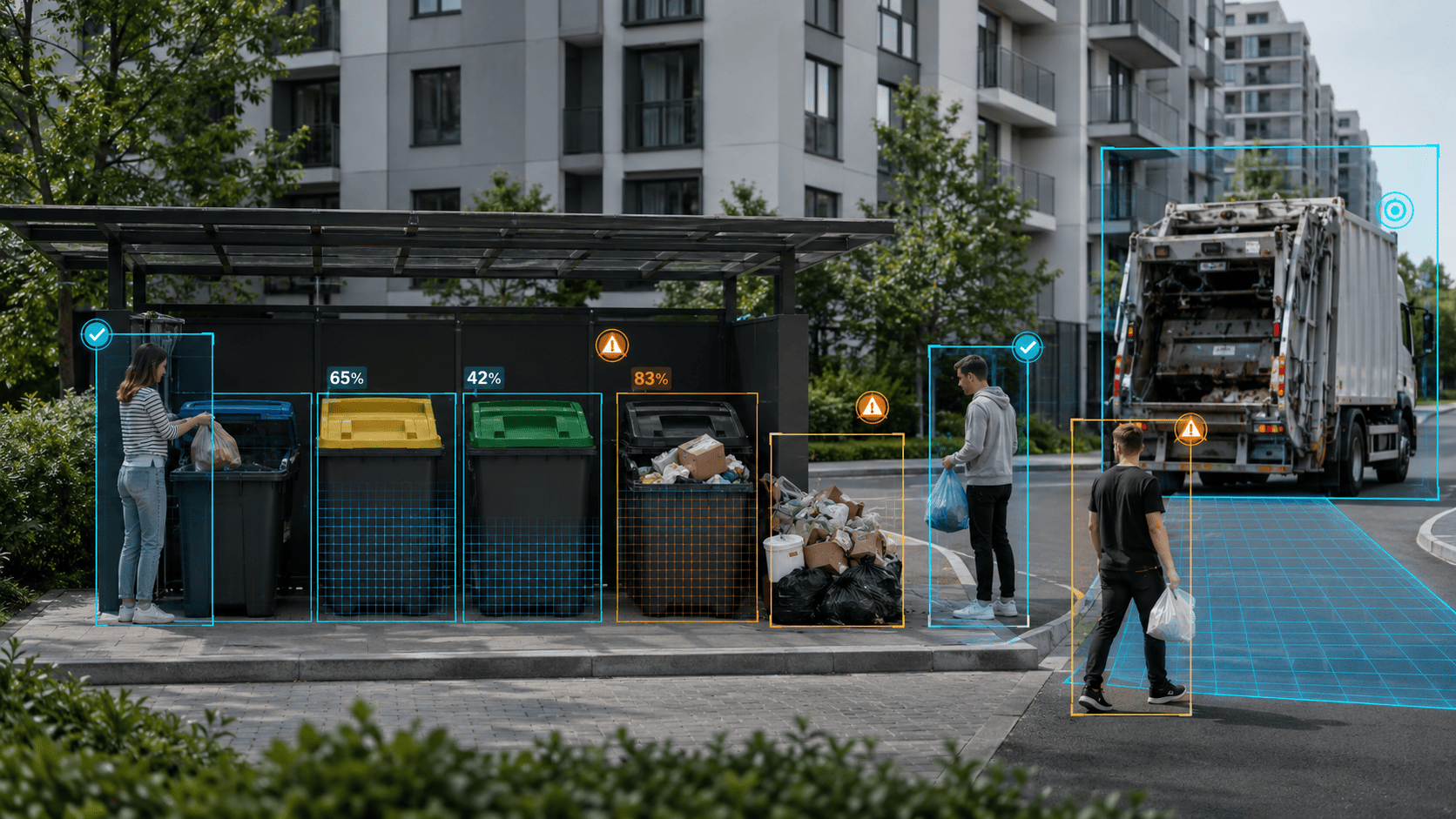
Waste handling control

Containers, fill level, waste piles, bin condition, resident behavior and pickup.
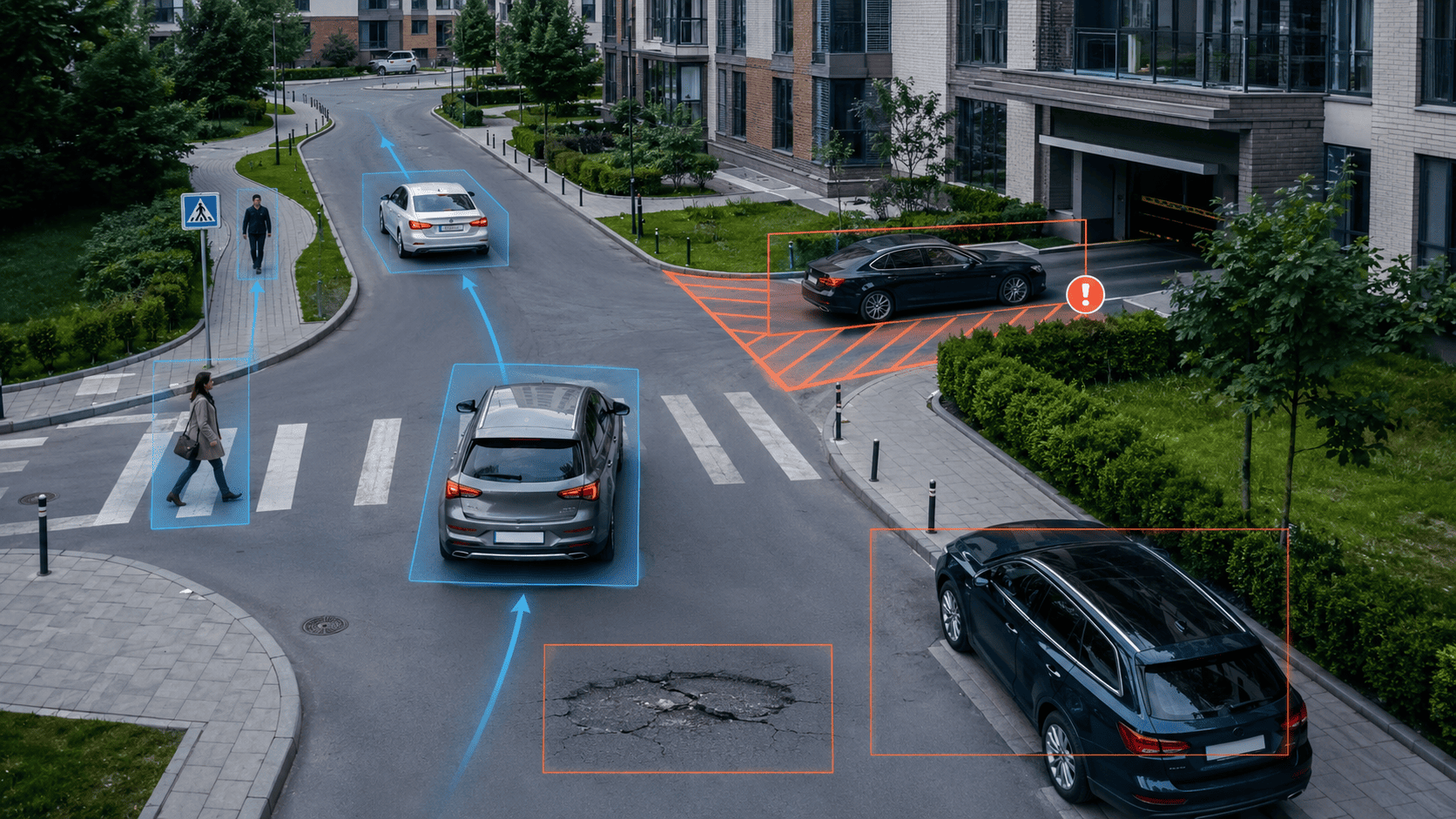
Roads, driveways and parkingRoads

Roads, driveways and parking

Blockages, surface condition, unsafe parking, courtyard traffic and emergency access.
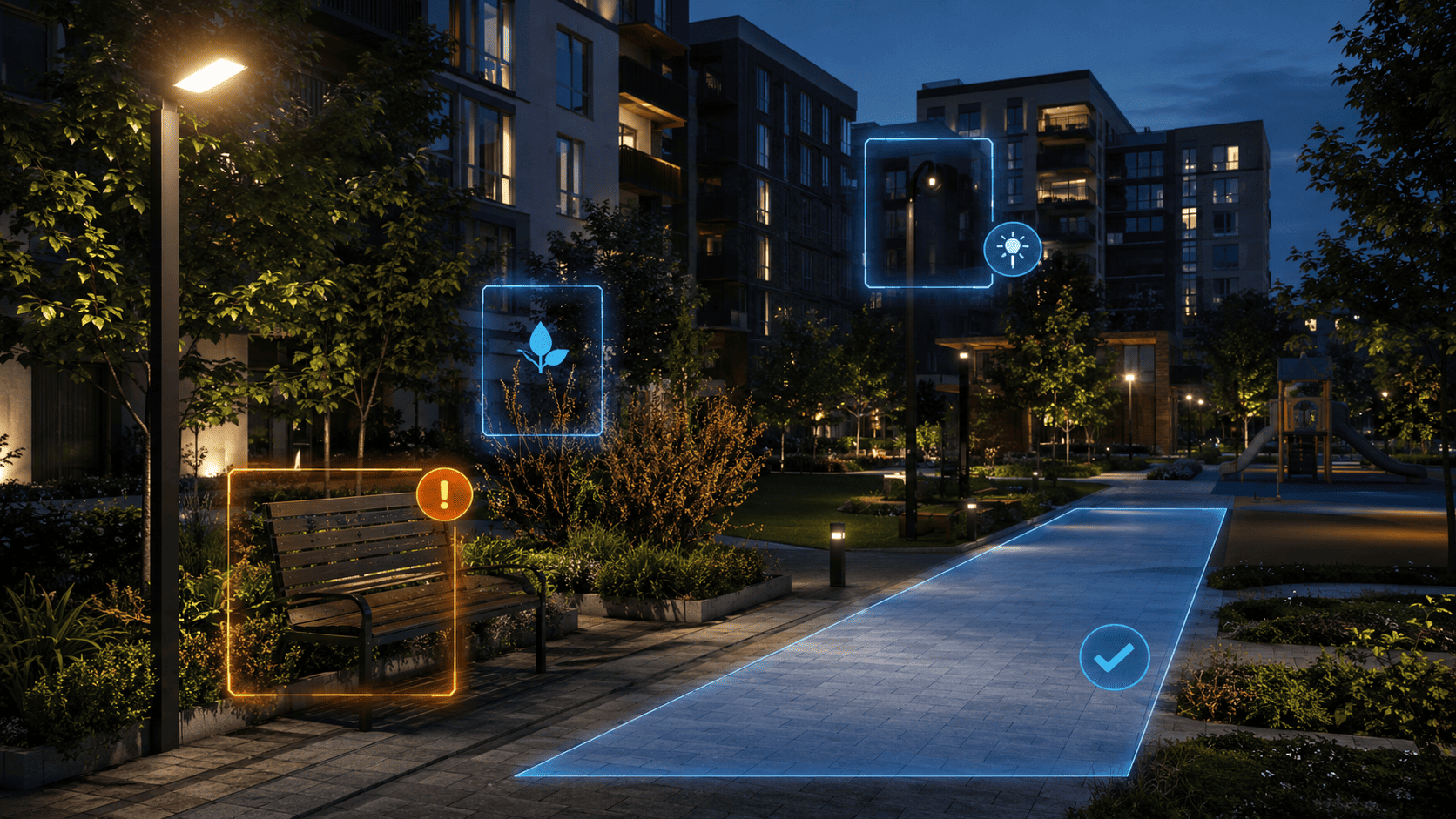
Lighting and site amenitiesAmenities

Lighting and site amenities

Dark zones, damaged assets, benches, lawns, paths, cleaning and territory condition.
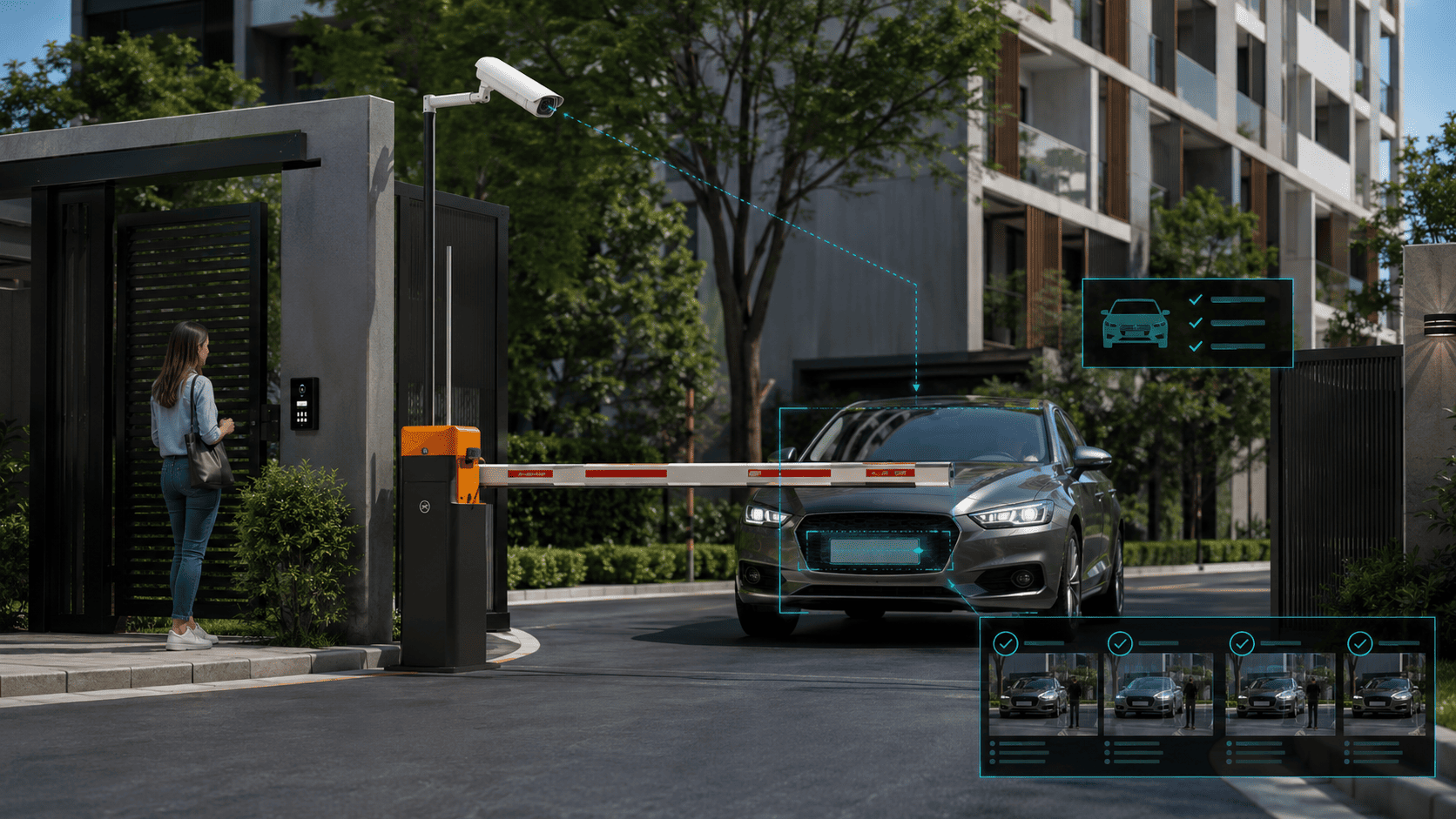
Smart automated barrierAccess

Smart automated barrier

License plate and vehicle attribute recognition, authorized lists, emergency vehicles and passage archive.
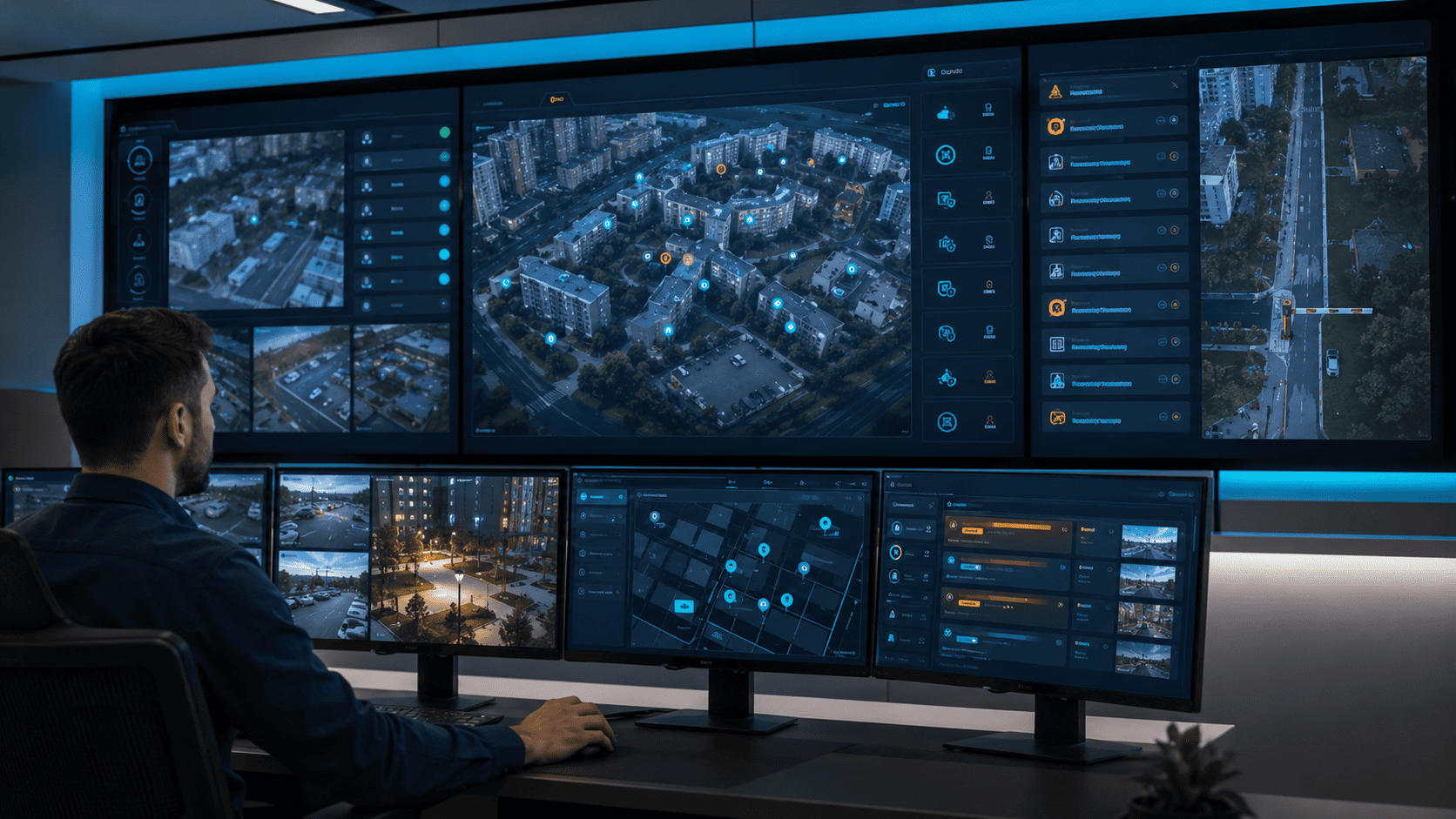
Unified control windowCenter

Unified control window

Site map, events, contractor tasks, notifications, reports and comparison across buildings.

Waste handling control

Containers, overflow, resident behavior and pickup compliance

A dedicated SmartCity-style block: the system monitors container areas, bin condition, fill level, overflow piles, disposal violations and actual contractor pickup.

Waste container area and truck monitoring
The system links the frame, container, violation, contractor and pickup time into one event log.

Container control

Containers must remain in the designated area; the system detects displacement, absence or foreign objects.

Bin condition

Container, shelter or bunker damage, graffiti, ads and vandalism traces are recorded in the log.

Fill level

The system distinguishes empty, partially filled and overflowing containers without waiting for complaints.

Waste piles

Detection of waste piles, trash near the area, bulky items and sanitation violations.

Disposal behavior

People count, sorting violations, disposal outside containers and disputed situations.

Waste pickup

Pickup time control, truck detection, license plate logging and schedule compliance confirmation.

Smart access

Fully automated barrier for courtyards and restricted residential areas

The same scenario as for parking: the camera recognizes the plate and vehicle attributes, checks them against authorized lists and controls the barrier without manual verification.

Smart automated barrier in a residential courtyard
The frame, plate, vehicle attributes, system decision and barrier action are stored in the archive.
How it works

Automatic access for residents, guests and emergency vehicles

The system works with existing IP cameras or a dedicated entrance camera. Each passage creates an event with an evidence frame.

Access rights can be linked to resident, tenant, temporary pass, contractor and emergency vehicle databases.

  • license plate, make, model, color and body type recognition
  • automatic opening for authorized vehicles
  • separate rules for guests, contractors and emergency vehicles
  • archive of passages, disputed cases and unauthorized attempts
platesbarrierarchive

Plate and attributes

Plate, make, model, color and body type are recognized even with incomplete data.

Residents and guests

Permanent lists, temporary passes and guest access are managed from one interface.

Emergency vehicles

Separate rules can be set for ambulance, fire, emergency and service vehicles.

Passage archive

Frames, time, verification result, barrier action and disputed events are stored.

Scenarios

From courtyard events to contractor tasks and reports

The platform links video streams to a specific zone, event type, responsible contractor and execution status.

Courtyards, entrances, resident routes and common areas
The system detects events in courtyards, near entrances, playgrounds, parking areas and resident routes.
Courtyard events

Courtyards, entrances, resident routes and common areas

The system detects events in courtyards, near entrances, playgrounds, parking areas and resident routes.

Events can be sorted by building, zone, type, time, priority and responsible executor.

  • unattended objects and suspicious situations
  • gatherings, conflicts, falls and unsafe behavior
  • playgrounds, benches, entrance groups and passages
  • evidence frames for resident request review
courtyards entrances events
Driveways, roads, parking and emergency access
Video analytics detects blocked passages, unsafe parking, road surface condition and traffic flows inside the site.
Roads and driveways

Driveways, roads, parking and emergency access

Video analytics detects blocked passages, unsafe parking, road surface condition and traffic flows inside the site.

This helps assign tasks faster and avoid keeping the issue only inside resident complaints.

  • blocked passage and emergency vehicle obstruction
  • surface damage, potholes, markings and obstacles
  • unsafe parking, rule violations and congestion
  • before-and-after confirmation of the fix
driveways roads emergency access
Dark zones, damage, cleaning and territory condition
The system helps see where lighting is off, amenities are damaged or an area needs cleaning.
Lighting and amenities

Dark zones, damage, cleaning and territory condition

The system helps see where lighting is off, amenities are damaged or an area needs cleaning.

Events can be linked to the contractor, regulation, SLA and completion report.

  • dark zones and failed lights
  • damaged benches, fences, bins and surfaces
  • graffiti, ads, vandalism traces and pollution
  • cleaning, snow, ice and passage control
lighting amenities cleaning
Building map, events, contractors, notifications and KPIs
For a network of buildings, a single event log, task status and site comparison matter more than one frame.
Unified control center

Building map, events, contractors, notifications and KPIs

For a network of buildings, a single event log, task status and site comparison matter more than one frame.

Management sees problem zones, contractors, overdue tasks, recurring requests and dynamics across buildings.

  • map of buildings, courtyards, waste areas and entrances
  • event statuses, responsible parties and completion control
  • reports by contractors, zones, buildings and periods
  • notifications via interface, email, Telegram or webhook
map KPI contractors
Impact

What we measure in the pilot

In the pilot we select 3–5 scenarios, capture baseline requests and compare response speed, confirmed events and contractor quality.

+eventscourtyards, entrances, roads, lighting, containers and access in one log
-complaintsearly detection of overflow, waste piles, violations and missed pickup
accessautomatic access for residents, guests, contractors and emergency vehicles
2–4 weekstypical pilot on one courtyard, building, complex or camera group
For whom

One control layer for management, dispatchers, contractors and security

Each team sees only the events and tasks it needs: from waste and lighting to access, safety and reports.

Management company

  • map of buildings, courtyards and problem zones
  • comparison of sites, contractors and deadlines
  • KPIs, reports and request dynamics

Dispatcher

  • events, notifications and evidence frames
  • jump to camera, zone and archive
  • assignment of a responsible executor

Contractors

  • waste pickup, cleaning, lighting and repairs
  • before-and-after frames
  • deadline and recurring issue control

Security and access

  • barrier, guests, contractors and emergency vehicles
  • unattended objects and disputed events
  • archive of passages, frames and decisions
Integrations

Connects to existing cameras and management processes

No need to replace video surveillance. Scenarios run on top of existing cameras and gradually connect to dispatch, access, contractors, reports and notification channels.

IP cameras and VMS

RTSP/ONVIF, NVR/VMS, edge or server processing, work with already installed cameras.

Barriers and access

Integration with authorized lists, guest passes, contractors and barrier control.

Notifications

Events for dispatcher, security, contractor and management via interface, email, Telegram or webhook.

Reports and BI

Aggregated metrics by buildings, courtyards, containers, contractors, deadlines and recurring requests.

Related solutions

What is often connected with residential utilities scenarios

Residential sites are usually connected with safety, access, queues and people flows. These scenarios can be developed as separate products.

We will design a pilot for one courtyard, complex or building network

We start with the camera map, zones, waste areas, entrances and contractors. Then we launch 3–5 scenarios, capture baseline requests and keep only what creates measurable value.