Statanly for parking

Video analytics for parking lots and garages

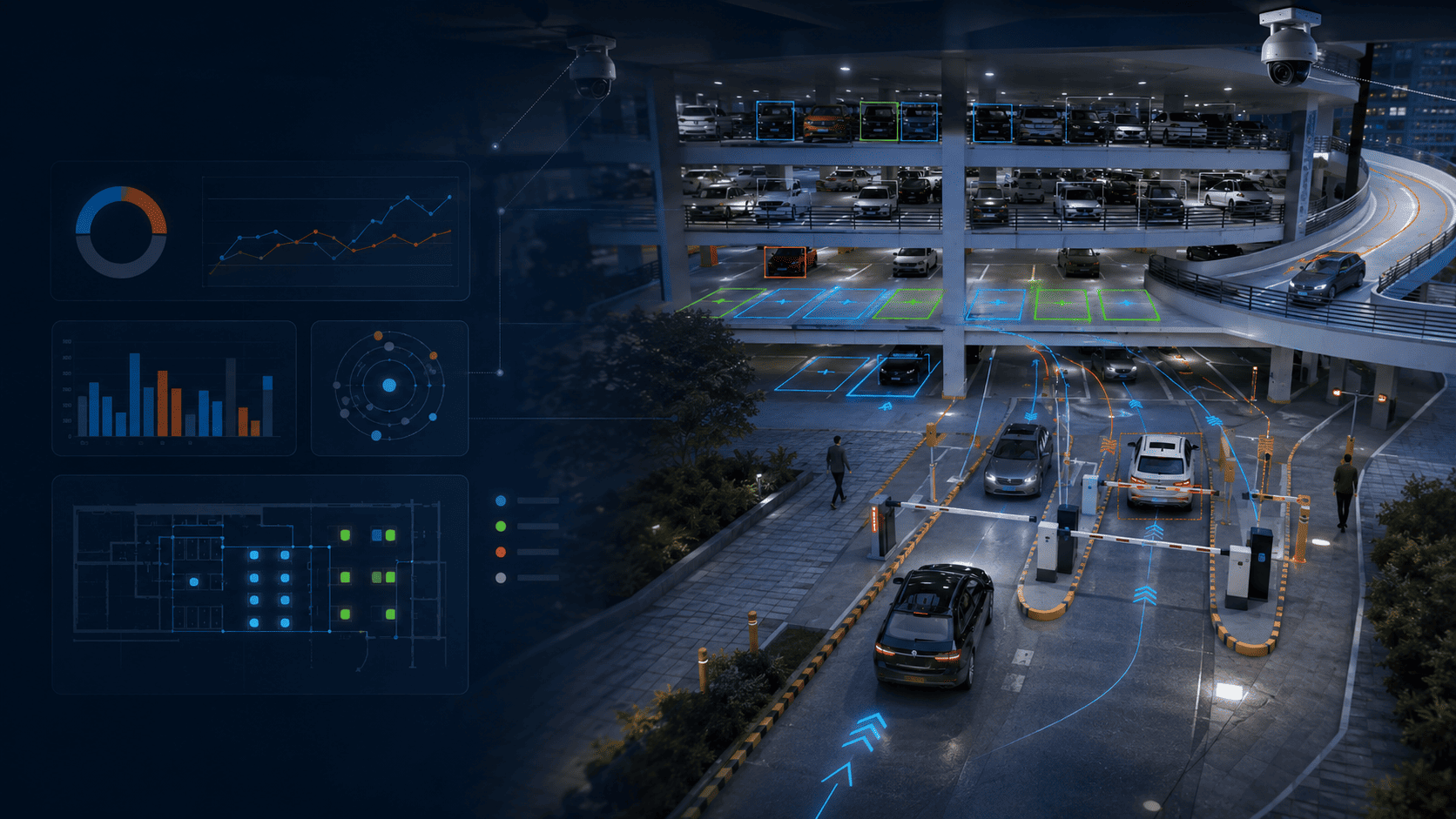
A unified control layer for free spaces, entry and exit, violations, safety, incidents, fire and smoke using existing cameras, events and integrations.

24/7events, frames and evidence without manual archive review
spacesfree and occupied spaces, zones, floors and parking occupancy
entryentry, exit, queues, barriers, service speed and congestion
LPRoptional license plate recognition, vehicle search and access linkage
RTSPconnection to existing IP cameras, VMS, NVR and edge infrastructure
HSEfire, smoke, fights, falls, suspicious objects and hazardous zones
Challenge

Parking needs to be visible as a managed operation

Cameras already cover entries, levels, passages and payment zones. Video analytics turns that stream into events, statuses, notifications and metrics for operators, security and facility teams.

Free spaces are not visible in real time

Drivers search manually, operators miss overloaded zones, and signage quickly becomes outdated.

Entry and exit create queues

Congestion near barriers, payment points and ramps affects customer experience, traffic safety and operations.

Violations block traffic

Parking outside markings, stopping in lanes, misuse of accessible spaces and blocked exits require fast visual evidence.

Incidents must be noticed earlier

Accidents, falls, conflicts, fire, smoke and suspicious objects in parking areas cannot rely only on manual monitoring.

Core AI modules

Modules for parking lots, garages and site networks

Scenarios can be launched step by step: free spaces and entry/exit first, then violations, safety, fire and smoke, followed by a unified control center.
Free and occupied parking spacesSpaces

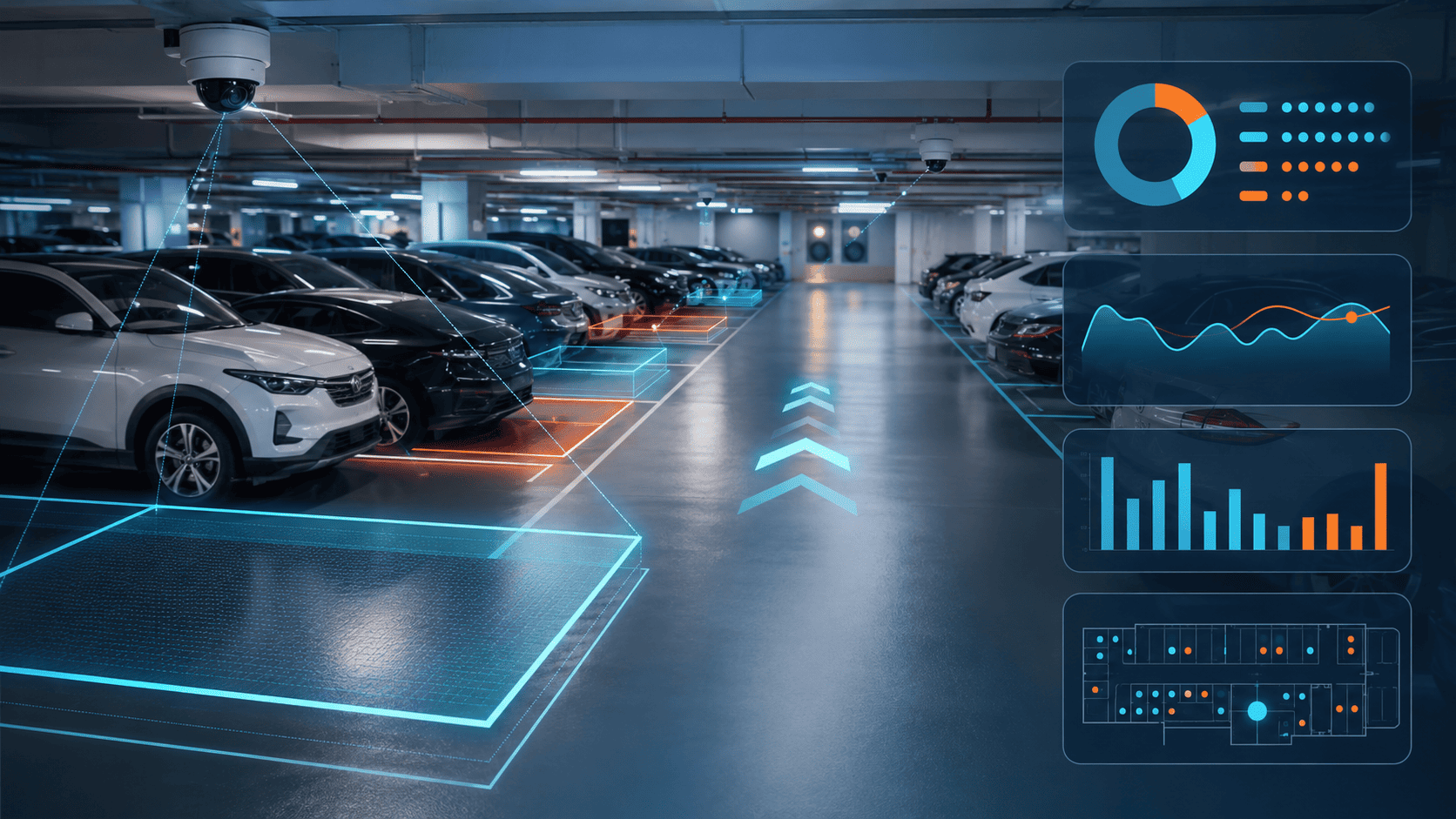
Free and occupied spaces

Free spaces, zone occupancy, floors, rows and overloaded areas.
Vehicle entry and exit at parkingEntry / exit

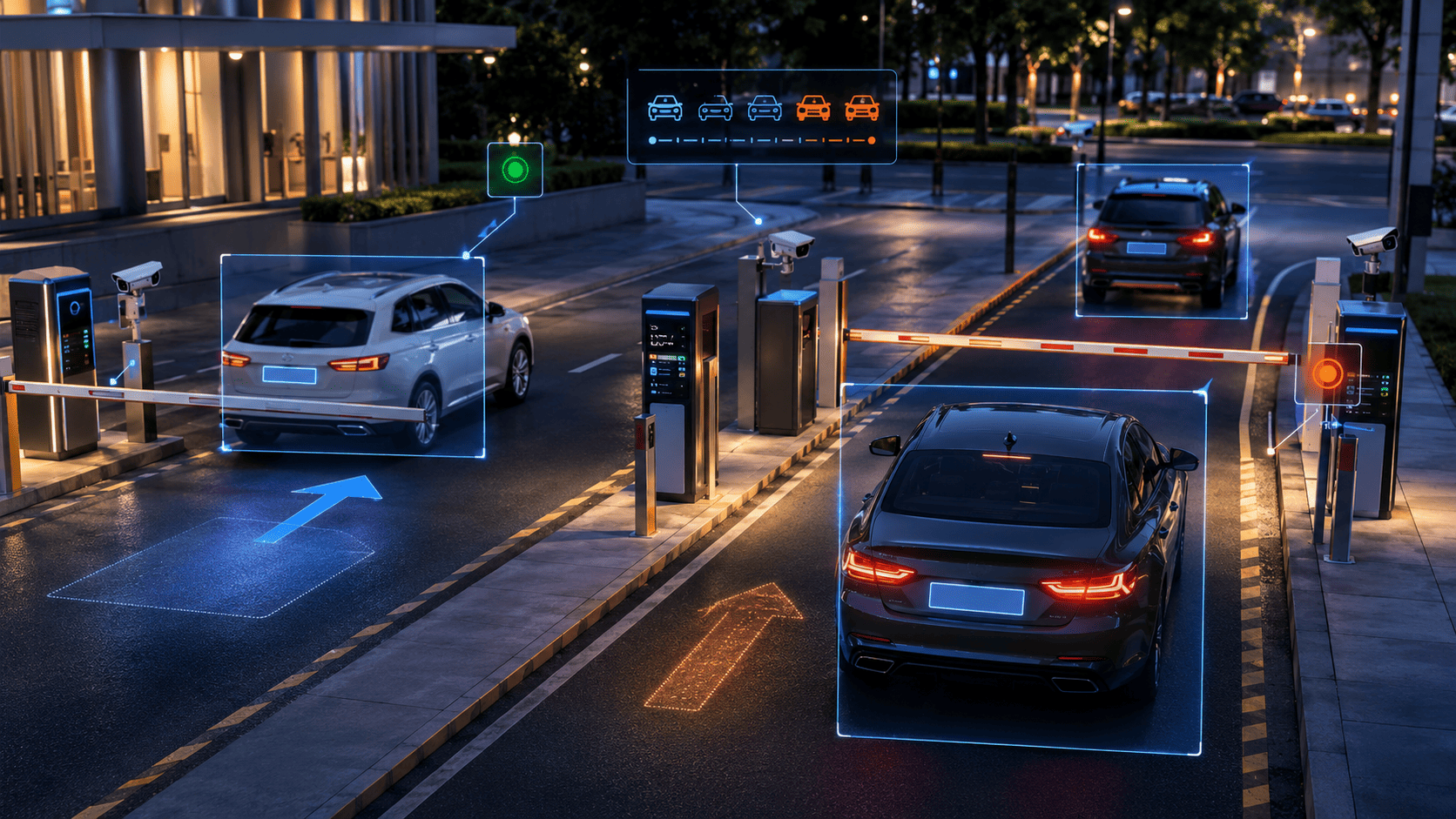
Entry, exit and queues

Vehicle flow, barriers, ramps, payment points, delays and exit queues.
Parking violations and blocked zonesViolations

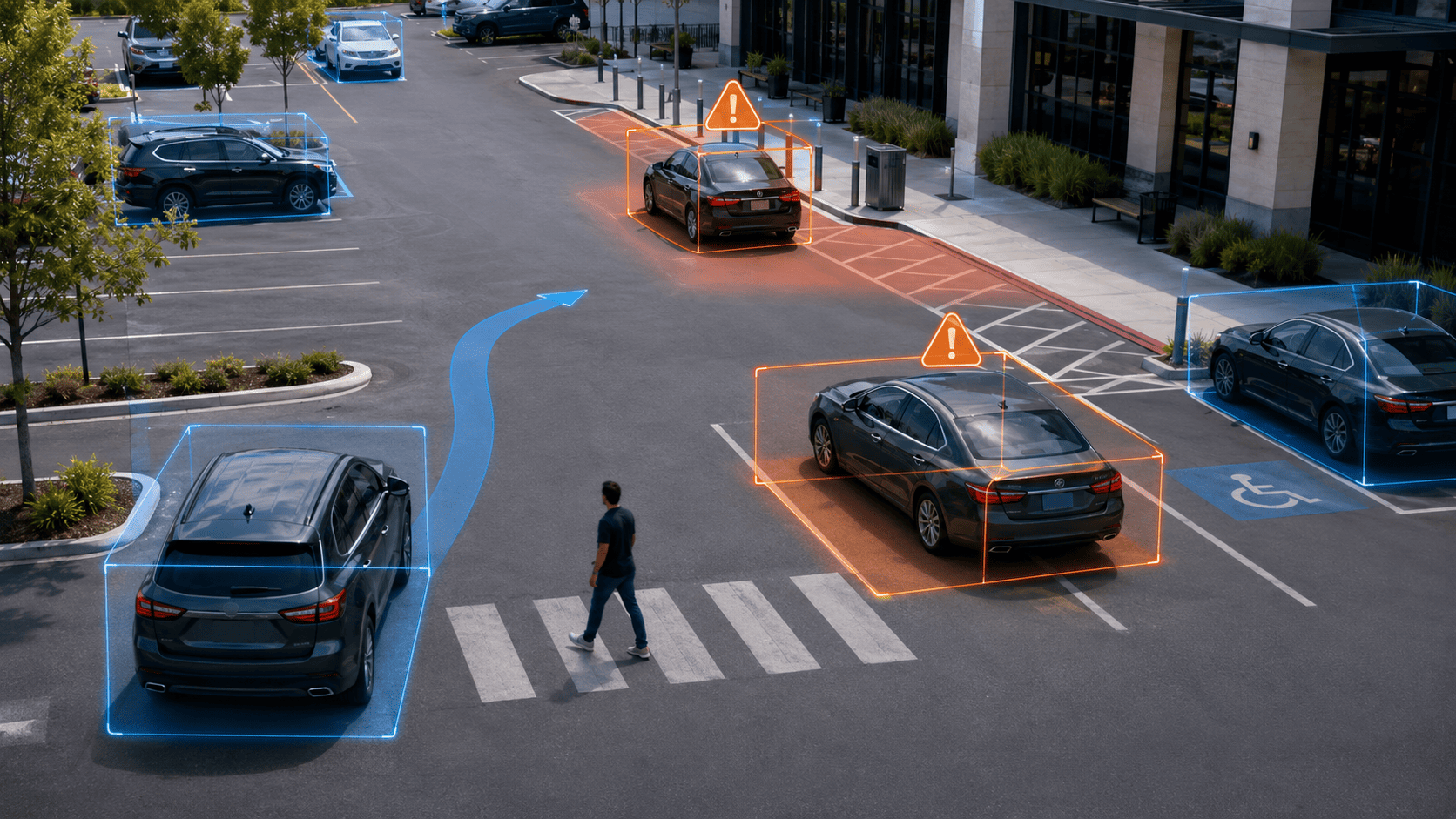
Parking violations

Parking outside markings, blocked lanes, misuse of reserved spaces and stopping in restricted zones.
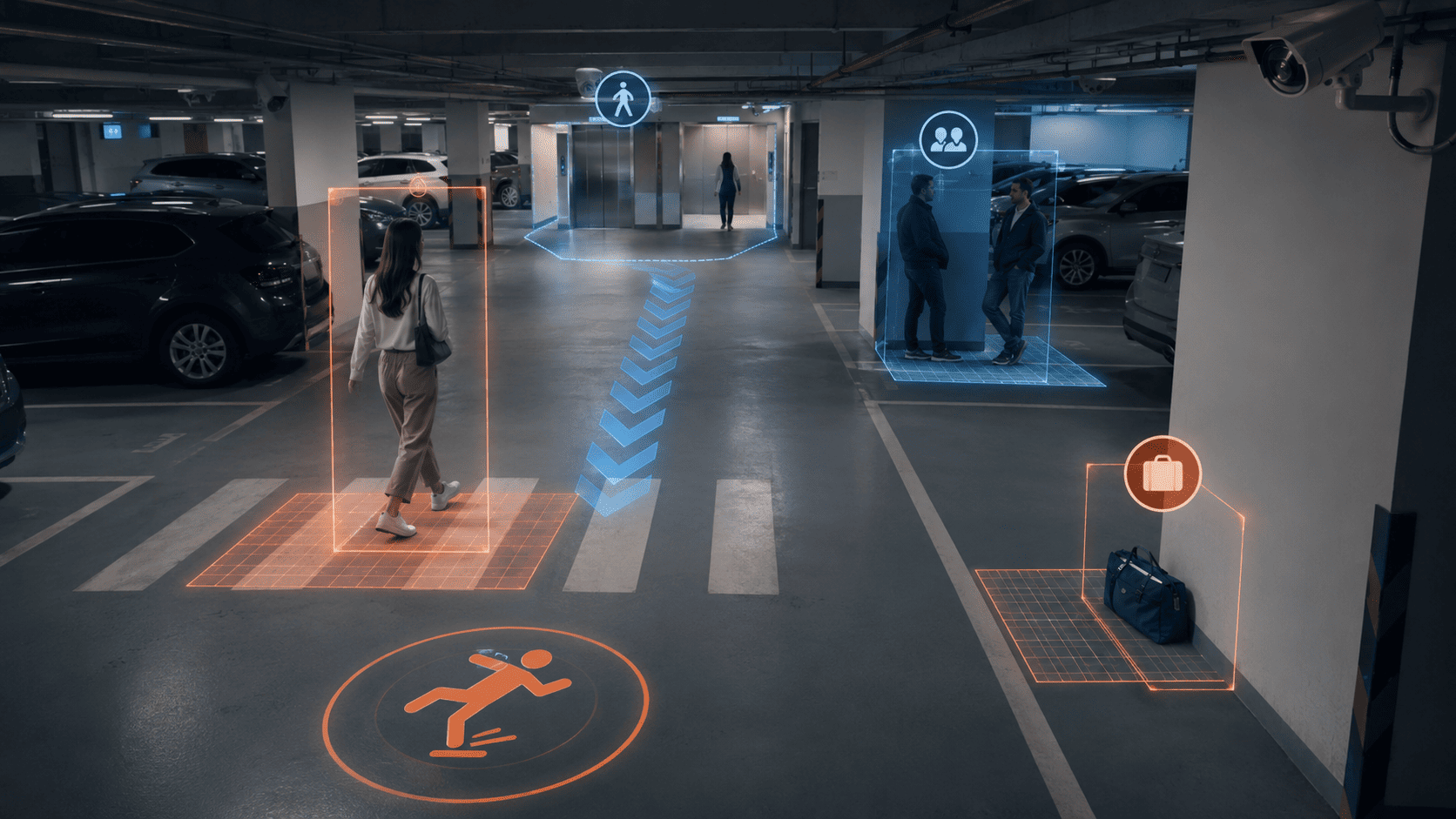
Safety and incidents in parkingSafety

Safety and incidents

Accidents, falls, conflicts, suspicious objects, hazardous zones and evidence frames.
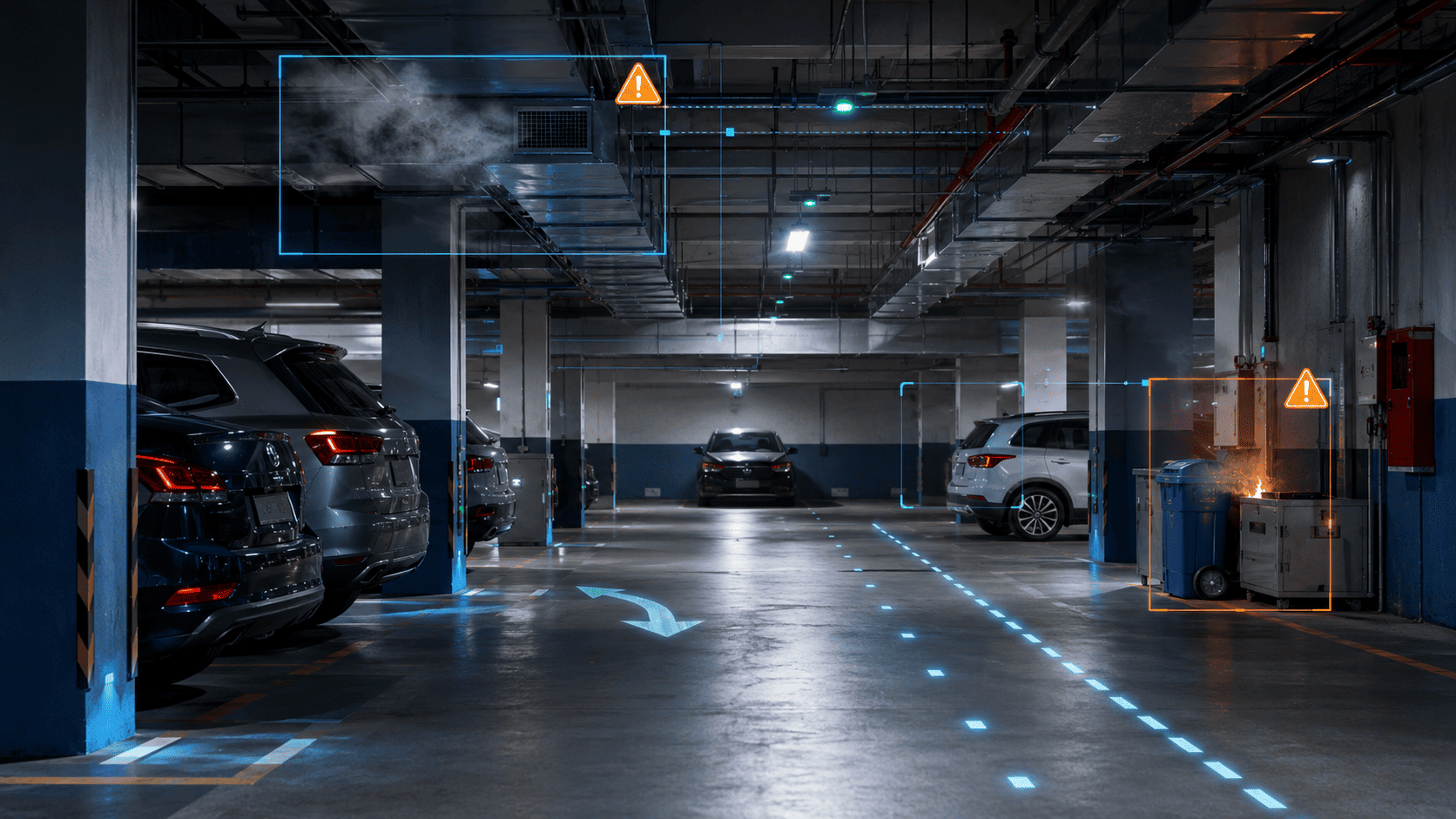
Fire and smoke detection in parkingFire / smoke

Fire, smoke and haze

Early signs of smoke, open flame, haze, overheating and blocked exits.
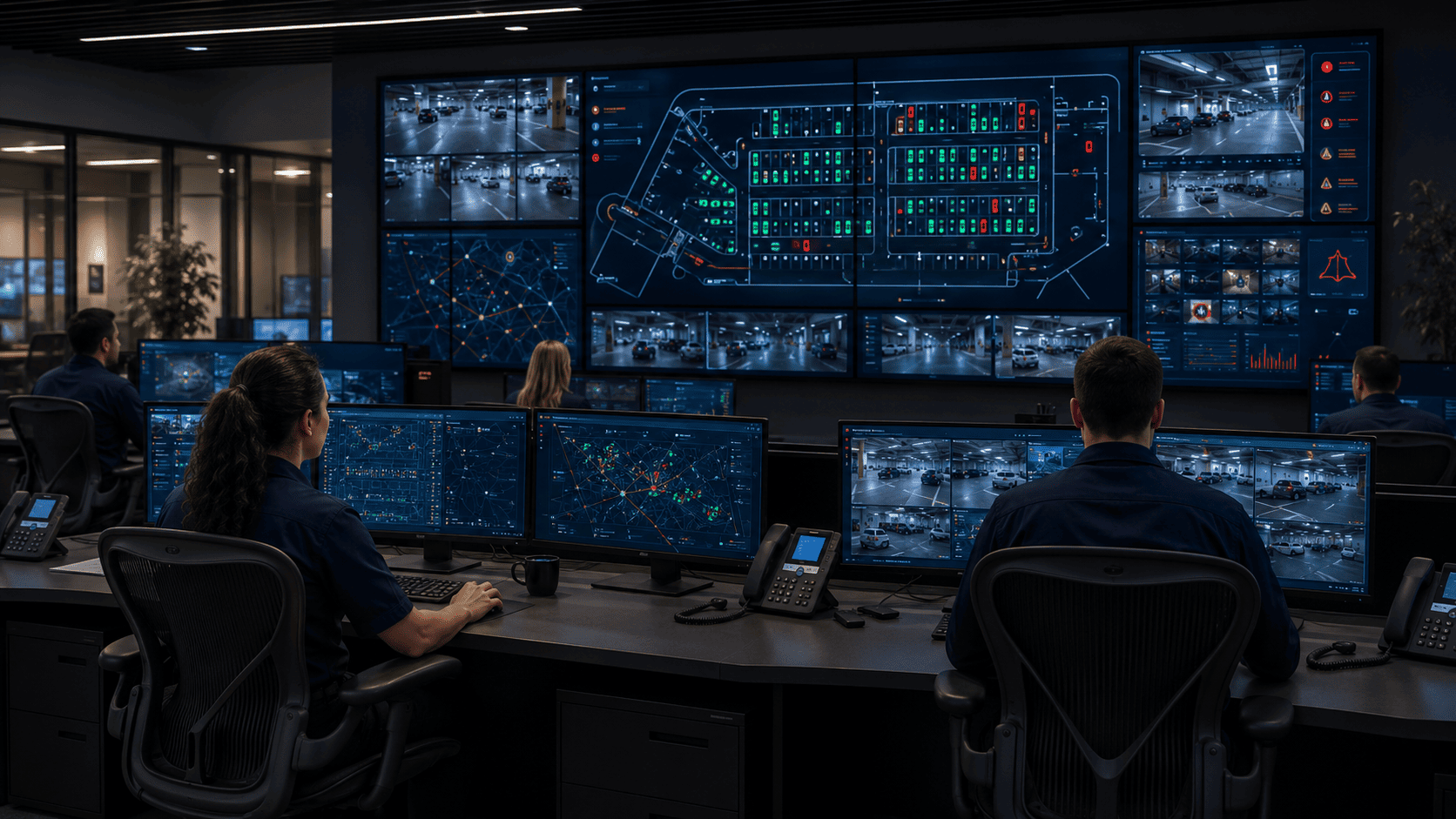
Parking network control centerCenter

Unified control window

Parking map, free spaces, entry/exit, events, archive, KPIs and network reports.

Smart vehicle access

Automatic access for vehicles and emergency services

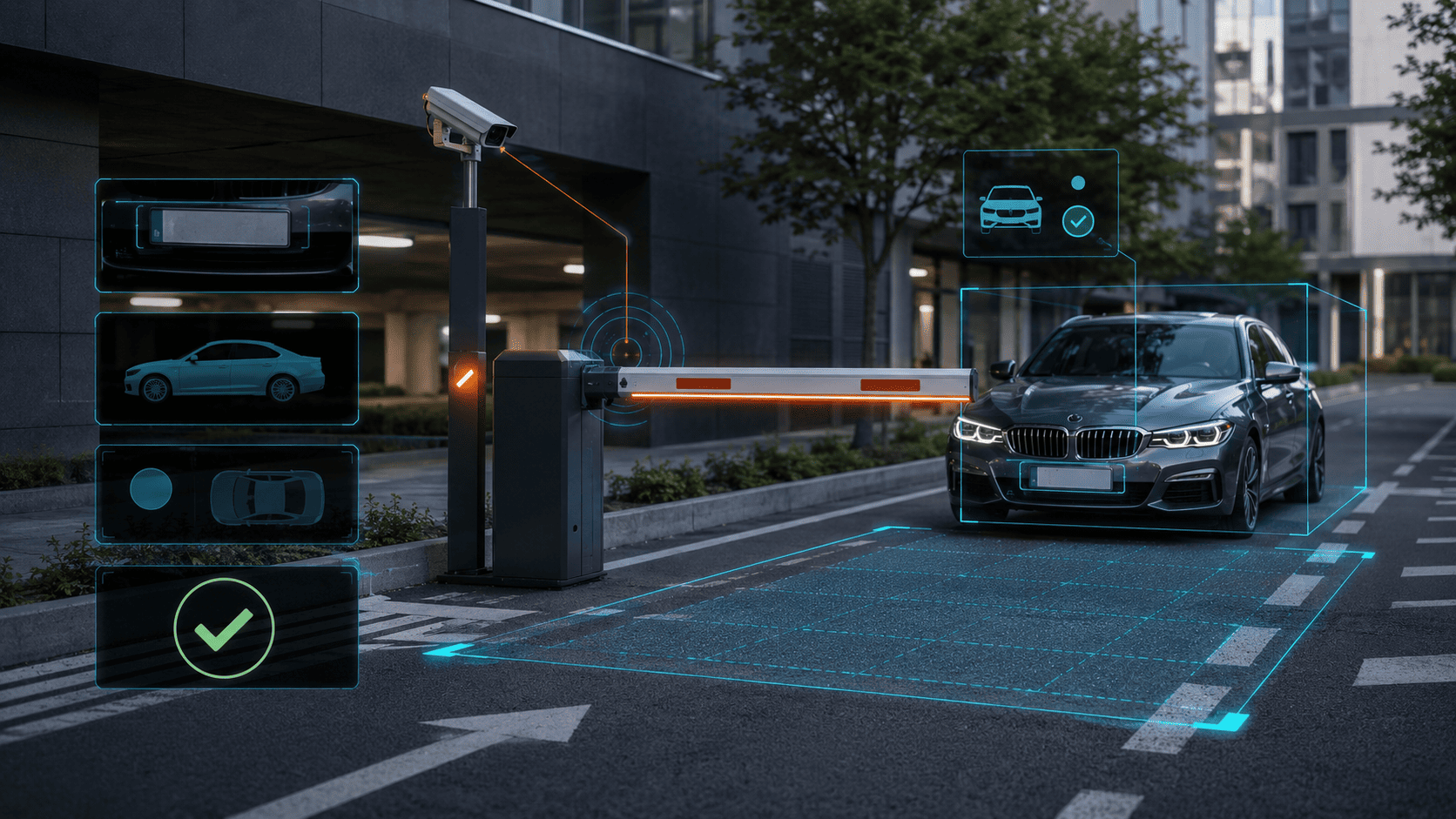
A scenario for parking sites, restricted areas and future residential utilities pages: the camera recognizes the vehicle, checks it against the authorized database and controls the barrier without manual verification.
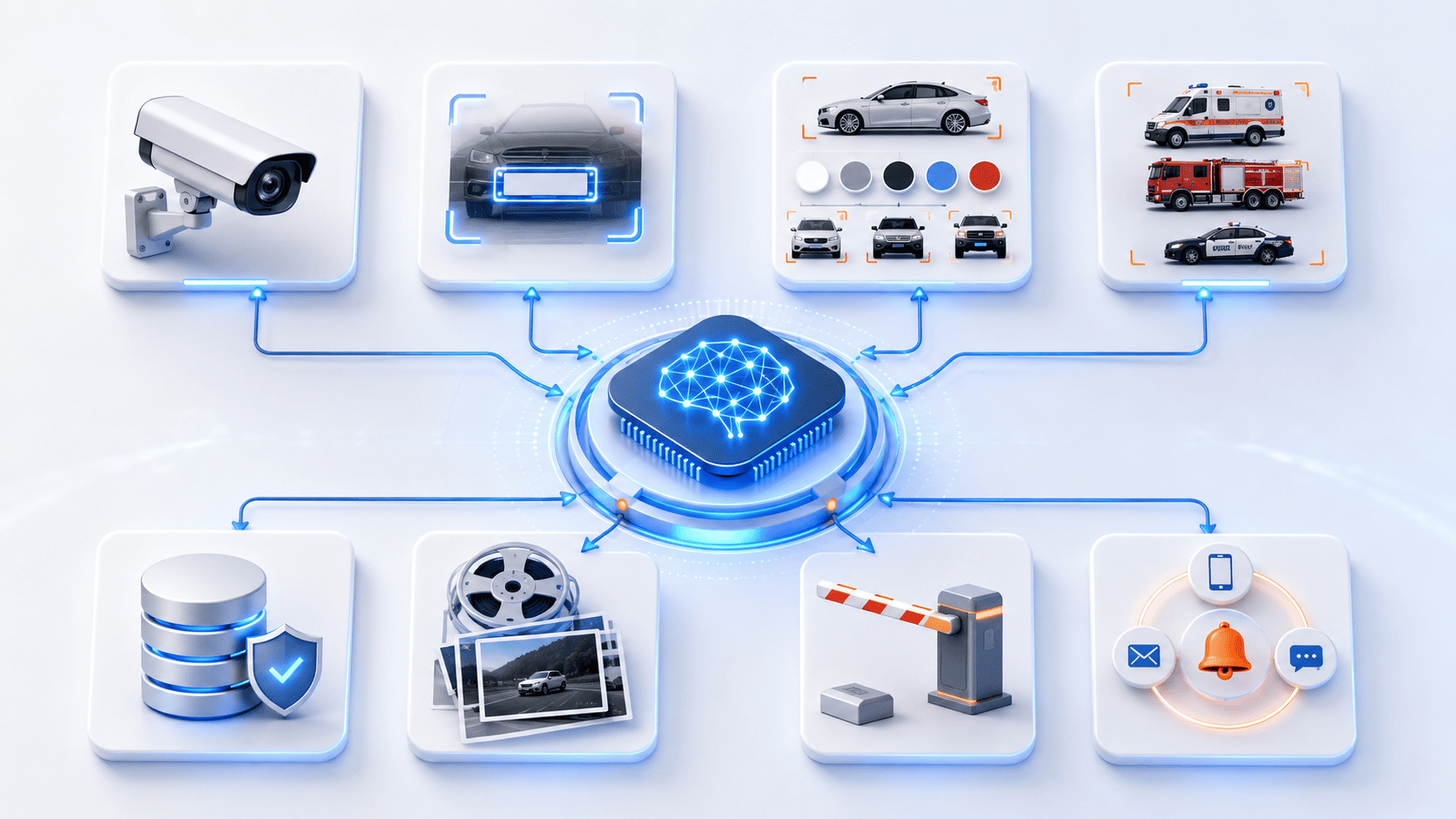
Smart vehicle access module diagram
Computer vision

License plate, vehicle and attribute recognition

The system uses IP cameras to analyze vehicle video data and software to process access events.

It can work with standard video cameras, server processing, edge infrastructure or cloud computing.
  • vehicle license plate recognition
  • make, model, color and body type recognition
  • emergency and special vehicle detection by color scheme and visual attributes
  • operation with dirty plates, rain, snow and low light
How it works

Fully automated barrier access

  1. the vehicle approaches the barrier and enters the camera field of view
  2. the system detects the plate number, make, model, color and body type
  3. recognized attributes are checked against authorized vehicle lists and access rules
  4. an opening command is issued for an authorized vehicle, resident, tenant or emergency vehicle
  5. the frame, event, verification result and action are stored in the archive
Useful for residential and restricted areasThe same module can be used for courtyards, residential complexes, service areas and sites with controlled access.
Automatic vehicle access through a barrier

Automatic opening

The barrier opens for authorized vehicles without calling a dispatcher or manual checks.

Emergency vehicles

Ambulance, fire and other service vehicles can be recognized by visual attributes and access rules.

Access rights

Authorized vehicle lists, tenants and temporary passes are updated centrally.

Passage control

The system records unknown vehicles, night entries, repeated passages and disputed cases.

Difficult conditions

Recognition works with dirty plates, rain, snow, glare and low lighting.

Less manual work

The operator handles only disputed events, while routine passages are processed automatically.

Archive and support

Photos, video, vehicle attributes and system decisions are available for review and investigation.

Space monetization

Access can be connected with paid spaces, tenants, subscriptions and temporary passes.

How it works

From camera feed to event, space status and operator action

The platform analyzes video streams, links events to parking zones and sends statuses to the interface, notifications, reports or external systems.

Free spaces and parking occupancy
The camera records space status, zone occupancy and changes by row, floor or sector.
Free spaces

Occupancy of spaces, rows, floors and zones

Video analytics detects free and occupied spaces, zone load, parking duration and areas where drivers spend time searching.

The data can be shown to operators, used for digital signage, mobile services or occupancy reports.

  • free and occupied spaces by zones and floors
  • overloaded rows and blind spots
  • long-term parking and abnormal occupancy
  • space status history for dispute analysis
occupancyspacesparking map
Vehicle entry, exit and queues
The system sees vehicle flow, delays, barrier queues and actual service time.
Entry and exit

Queues, barriers, ramps and passage speed

At entry and exit points it is important to understand not only vehicle count, but also delay causes: queue, payment issue, closed barrier, blocked lane or risky maneuver.

Events help operators react faster and managers see peak hours, bottlenecks and service dynamics.

  • vehicle counting at entry, exit and ramps
  • queue near barrier, payment point or exit
  • congestion, lane blockage and wrong-way movement
  • linkage with access, payment and optional plate recognition
flowqueuebarrier
Parking violations and blocked lane
A violation is recorded with zone, time, event type and verification frame.
Violations

Improper parking, blockages and restricted zones

Parking capacity quickly drops when vehicles occupy lanes, accessible spaces, fire zones or park outside markings.

The system highlights these events and helps send staff exactly where a violation affects traffic or safety.

  • parking outside markings or across multiple spaces
  • blocked lane, exit, ramp or service area
  • reserved spaces used against facility rules
  • long stop in pickup, delivery or evacuation zones
violationslanesevidence
Safety and incidents in parking
Parking incidents require not only notification, but fast access to the right camera and frame.
Safety

Accidents, conflicts, falls and suspicious objects

Indoor and multi-level parking areas include pedestrians, vehicles, blind zones, elevator halls and technical rooms. Events around people, vehicles and hazardous objects matter.

The platform helps notice incidents faster, verify the frame and send a notification to security or operations.

  • accident, collision, fall or person in hazardous zone
  • fight, conflict, suspicious behavior or crowding
  • unattended item, bag, box or unusual object
  • event search by camera, zone, time and type
incidentssecurityarchive
Fire and smoke in parking
Early visual confirmation of smoke and fire helps verify the event and exact zone faster.
Fire and smoke

Fire risks, smoke and evacuation zones

Parking areas need early visual signs: ceiling smoke, local flame, smoke near a vehicle, overheating, blocked exit or blocked fire lane.

Video analytics complements fire automation with visual confirmation and helps operators open the right camera quickly.

  • smoke, open flame and abnormal haze detection
  • control of fire lanes, exits and evacuation routes
  • event linked to zone, floor and nearest camera
  • notifications for security, operations and dispatch
smokefireevacuation
Parking control center
A parking network is visible in one interface: spaces, entries, violations, safety, events and KPIs.
Control center

A single window for one site or a parking network

When multiple parking sites are involved, comparable statuses matter: occupancy, free spaces, queues, violations, incidents, response time and repeated problem zones.

The dashboard combines map, cameras, events, archive, notifications and reports for operators, security and facility teams.

  • site, floor, zone and space status map
  • event log with frames, zones and time
  • site comparison by occupancy, queues and violations
  • data export to BI, reports and internal systems
networkKPIBI
Impact

What we measure in the pilot

Metrics depend on layout, cameras, parking rules and integrations. In the pilot we capture baseline values, launch 3–5 scenarios and compare results using the same metrics.

+spacestransparent occupancy by zones, floors, rows and free spaces
-queuestarget area for reducing delays at entry, exit and payment
+eventsviolations, incidents, fire, smoke and evidence frames in the log
2–4 weekstypical pilot on one site, level or camera group
For whom

One control layer for operators, security and facility teams

Each team sees the events it needs: free spaces, entry/exit, violations, safety, operations, reports and KPIs.

Parking operator

  • free spaces, zone and floor occupancy
  • queues, delays, barriers and payment points
  • fast jump to camera and event

Security

  • accidents, conflicts, falls and suspicious objects
  • fire, smoke, restricted zones and evacuation routes
  • frames for verification and investigation

Facility operations

  • lanes, ramps, exits and technical zones
  • congestion, failures and recurring issues
  • reports by shifts, zones and sites

Management company

  • parking site comparison by occupancy and violations
  • KPIs, SLAs, reports and network dynamics
  • shared event and notification rules
Integrations

Connects to existing infrastructure

No need to replace video surveillance. Scenarios run on top of existing cameras and can gradually connect to access, payment, BI, VMS and notification channels.

IP cameras and VMS

RTSP/ONVIF, NVR/VMS, edge or server processing, work with already installed cameras.

Access, payment and LPR

Integration with barriers, payment systems, passes and optional license plate recognition.

Notifications

Events for operators, security, operations and dispatch via interface, email, Telegram or webhook.

BI and reports

Export of aggregated metrics on spaces, queues, violations, incidents and network sites.

We will design a pilot for a parking lot, mall, office center or site network

We start with the camera plan, zones, entries, exits and parking rules. Then we launch 3–5 scenarios, capture baseline metrics and keep only what produces measurable value.