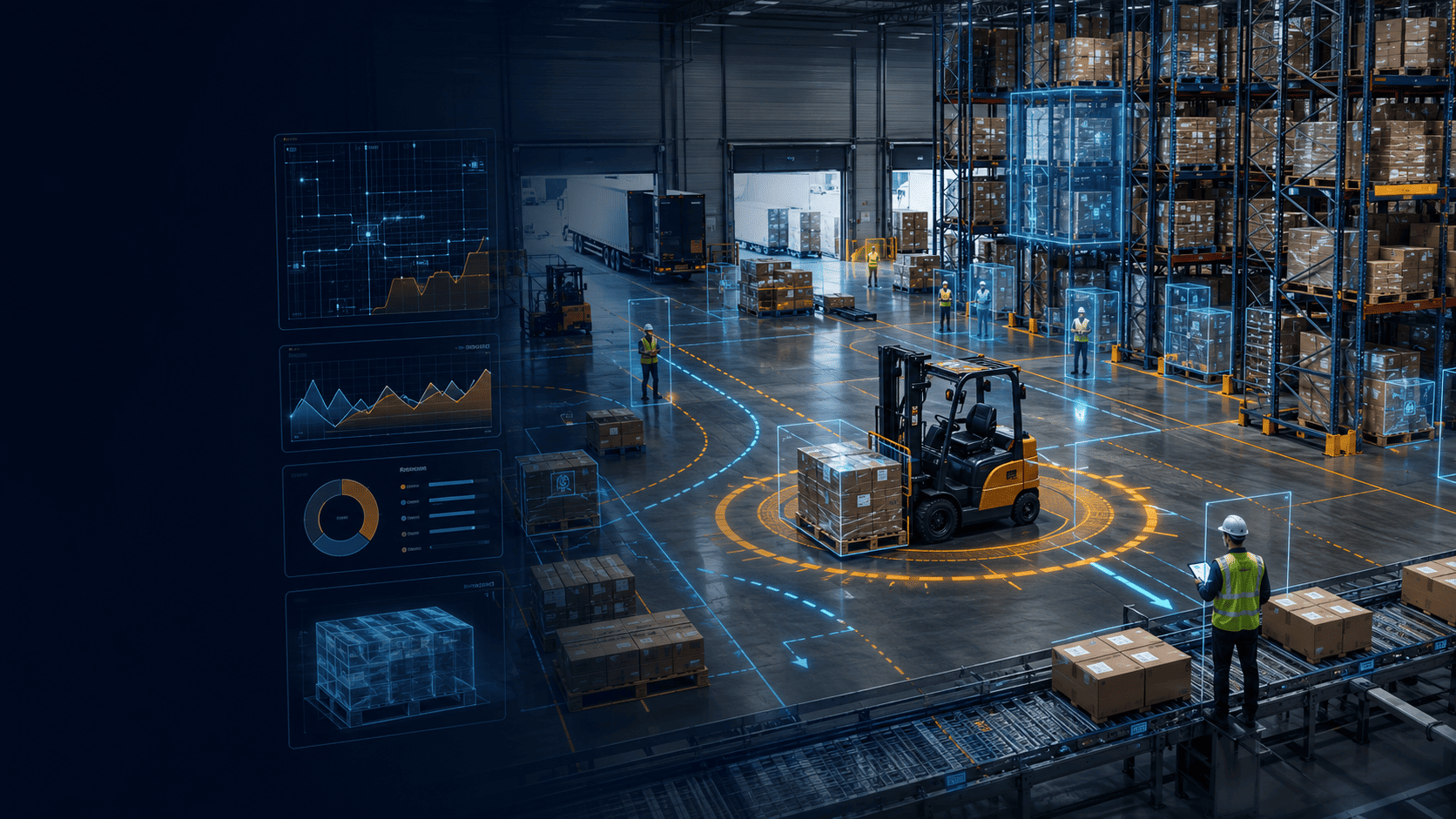
Storage zones change faster than records
Pallets appear in temporary places, passages get blocked, and free or overloaded zones are not always visible in the system.

Control of storage zones, cargo movement, forklift operations, personnel, docks and safety using existing cameras, events and integrations with WMS / TMS / ERP.
WMS shows the accounting operation, but often does not explain where cargo really is, why a zone is overloaded, who violated a vehicle route or what happened in a disputed moment.
Pallets appear in temporary places, passages get blocked, and free or overloaded zones are not always visible in the system.
Forklifts, pallet jacks, pedestrian routes and docks create risks of near-miss events, speed violations and unsafe zone entry.
Disputed movements, missing pallet, wrong storage zone or damaged packaging require fast camera search.
Fire, smoke, falls, unattended items, blocked passages, missing helmet or vest should become events, not manual archive review.
Scenarios can be launched in stages: storage zones and vehicles first, then cargo, personnel, docks, fire risks and a central control center for the network.
 Storage
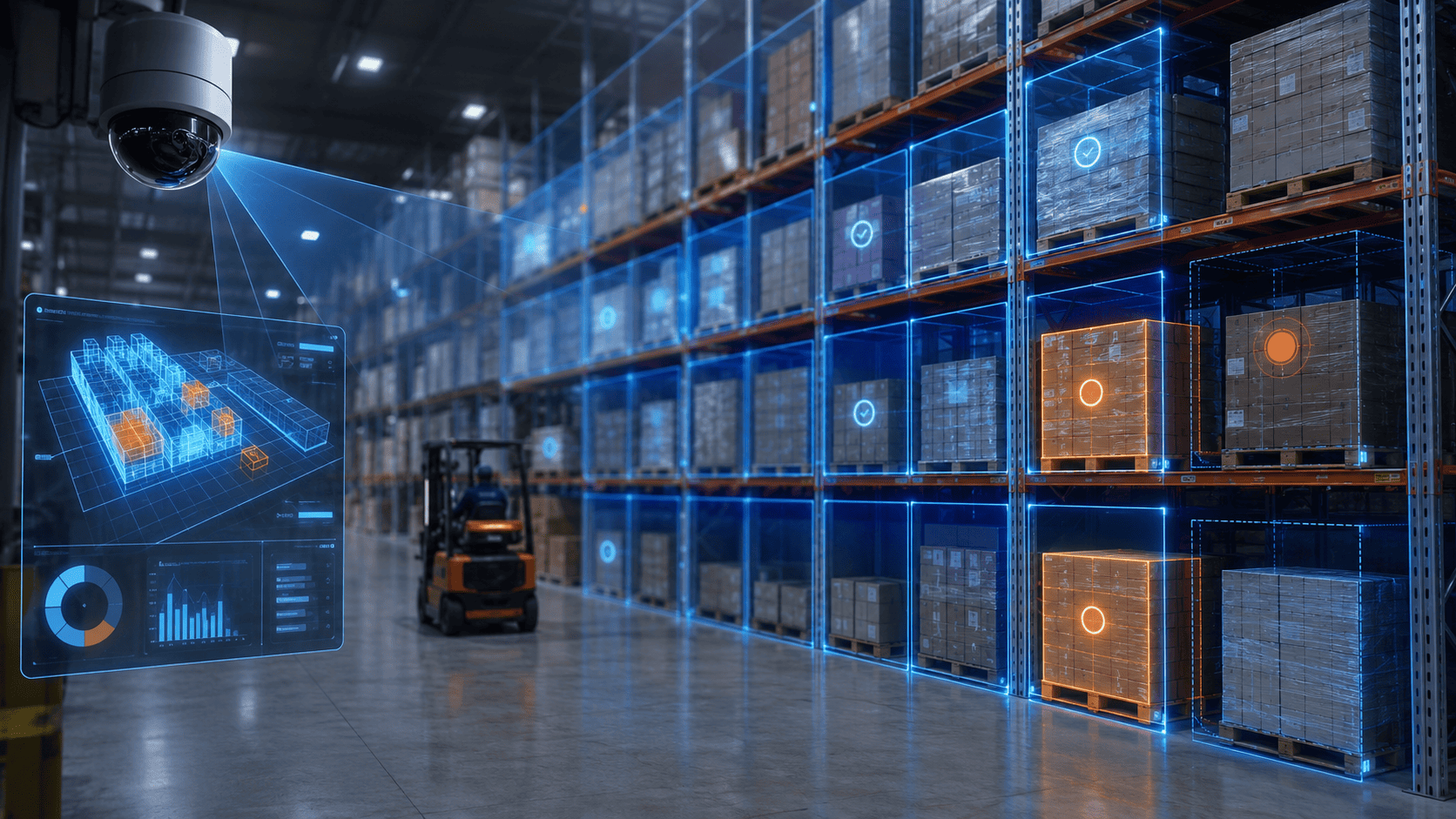
Control of pallet slots, temporary areas, empty locations, overload and blocked aisles.
 Vehicles
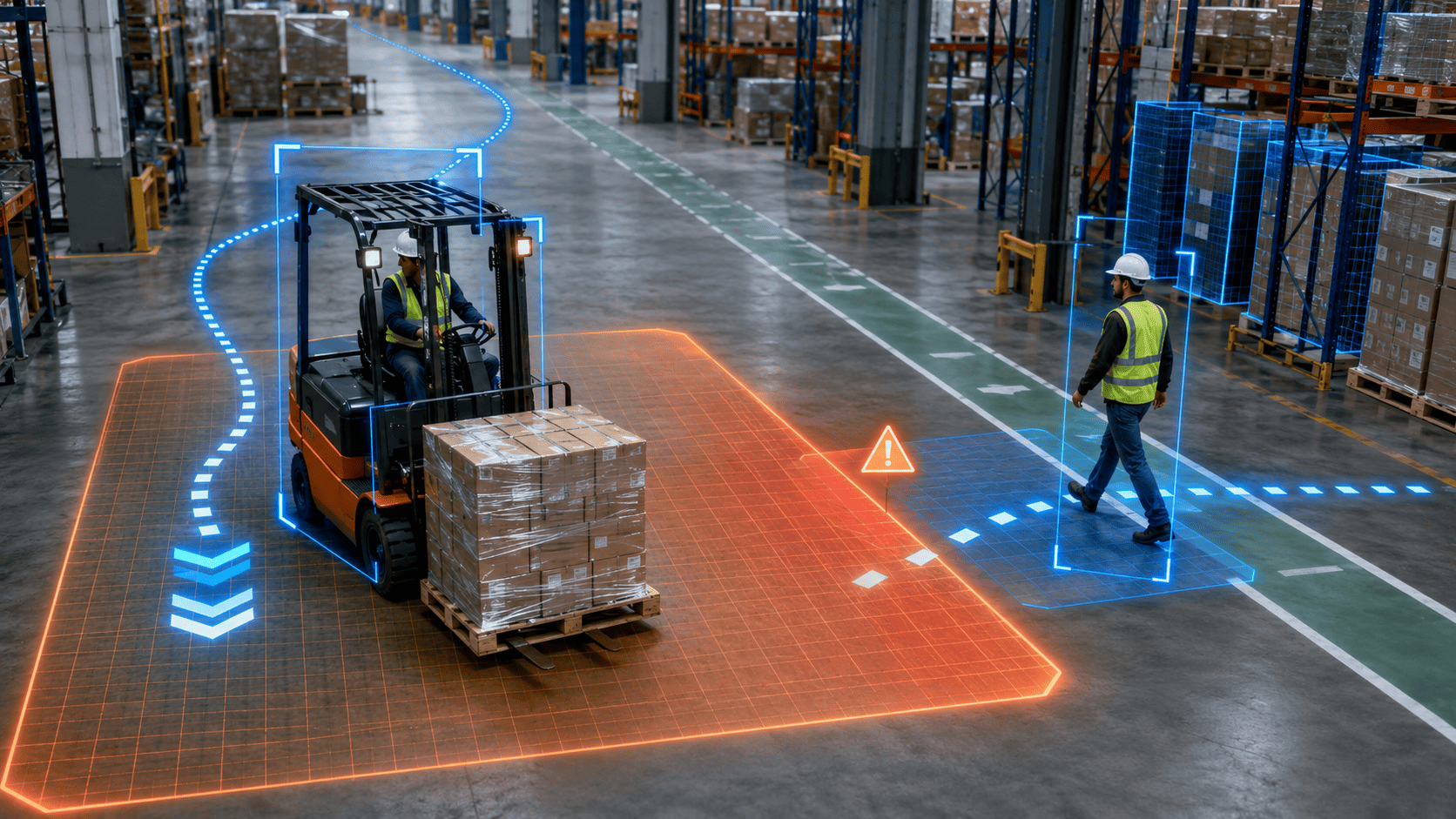
Vehicle movement, dangerous proximity to people, speed, routes and entry into restricted zones.
 Cargo
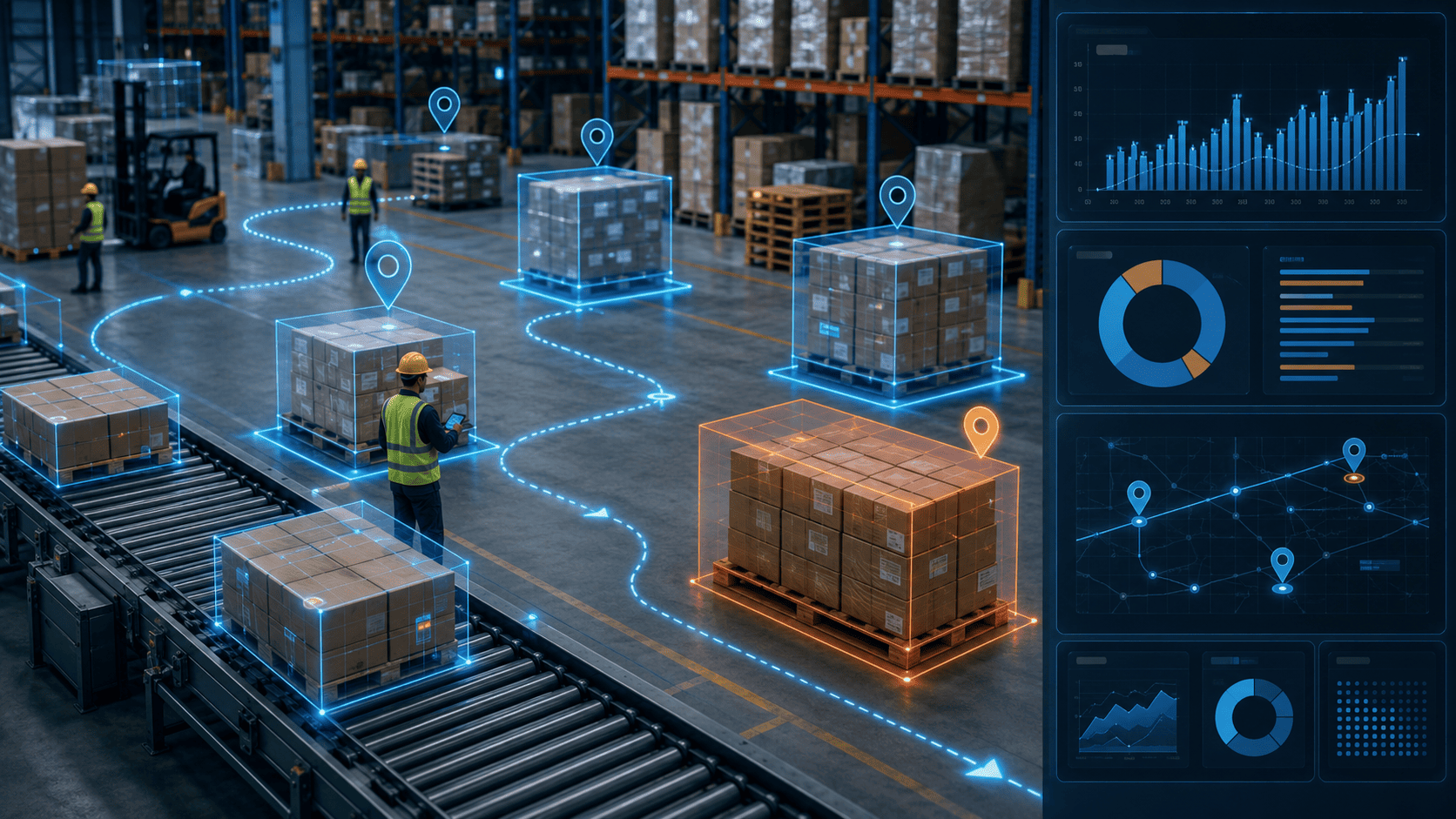
CargoPallet search, movement control, wrong zone, disputed receiving and evidence frames.
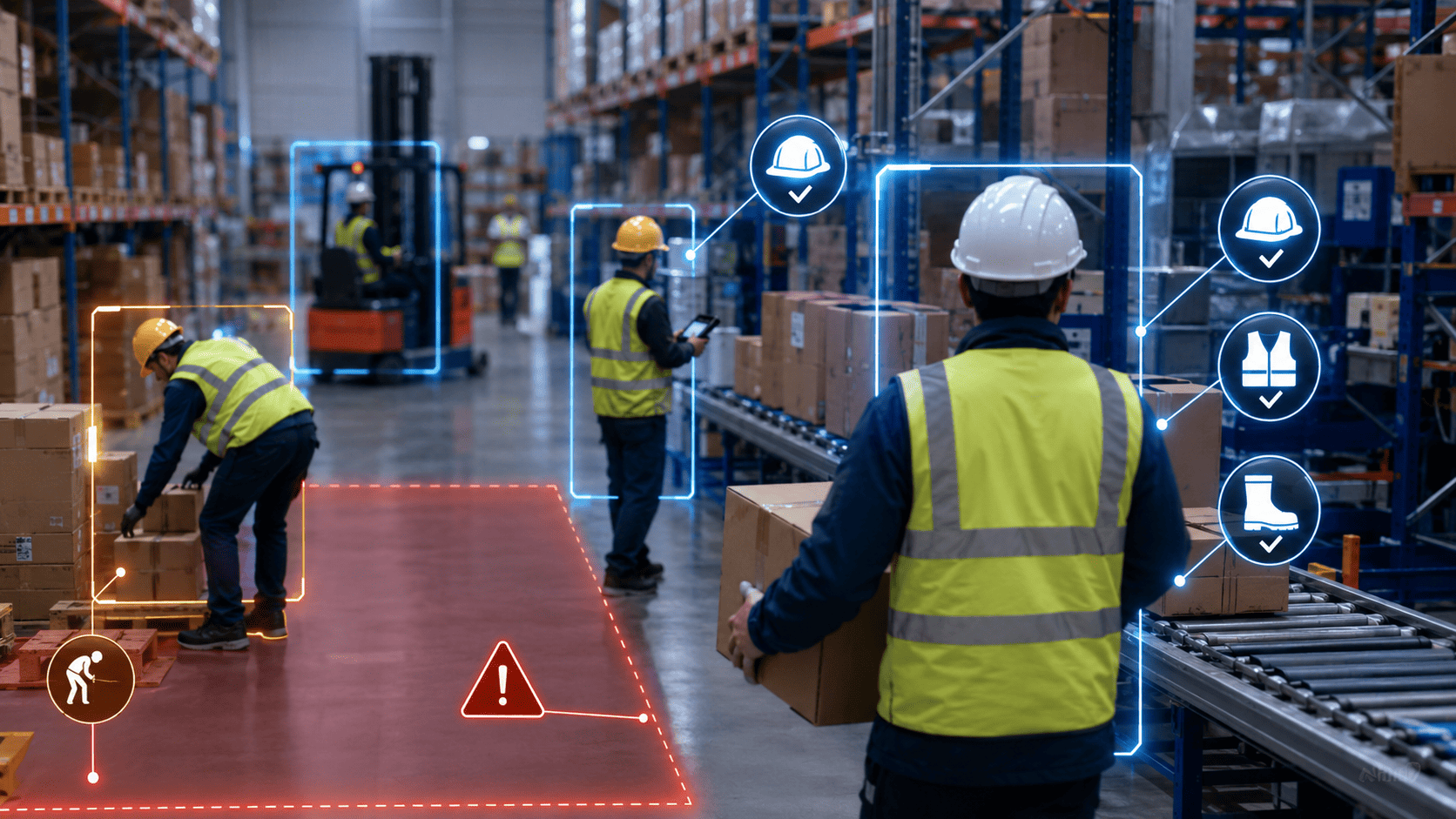 Personnel
PPE, helmets, vests, work zones, falls, unsafe actions and presence at post.
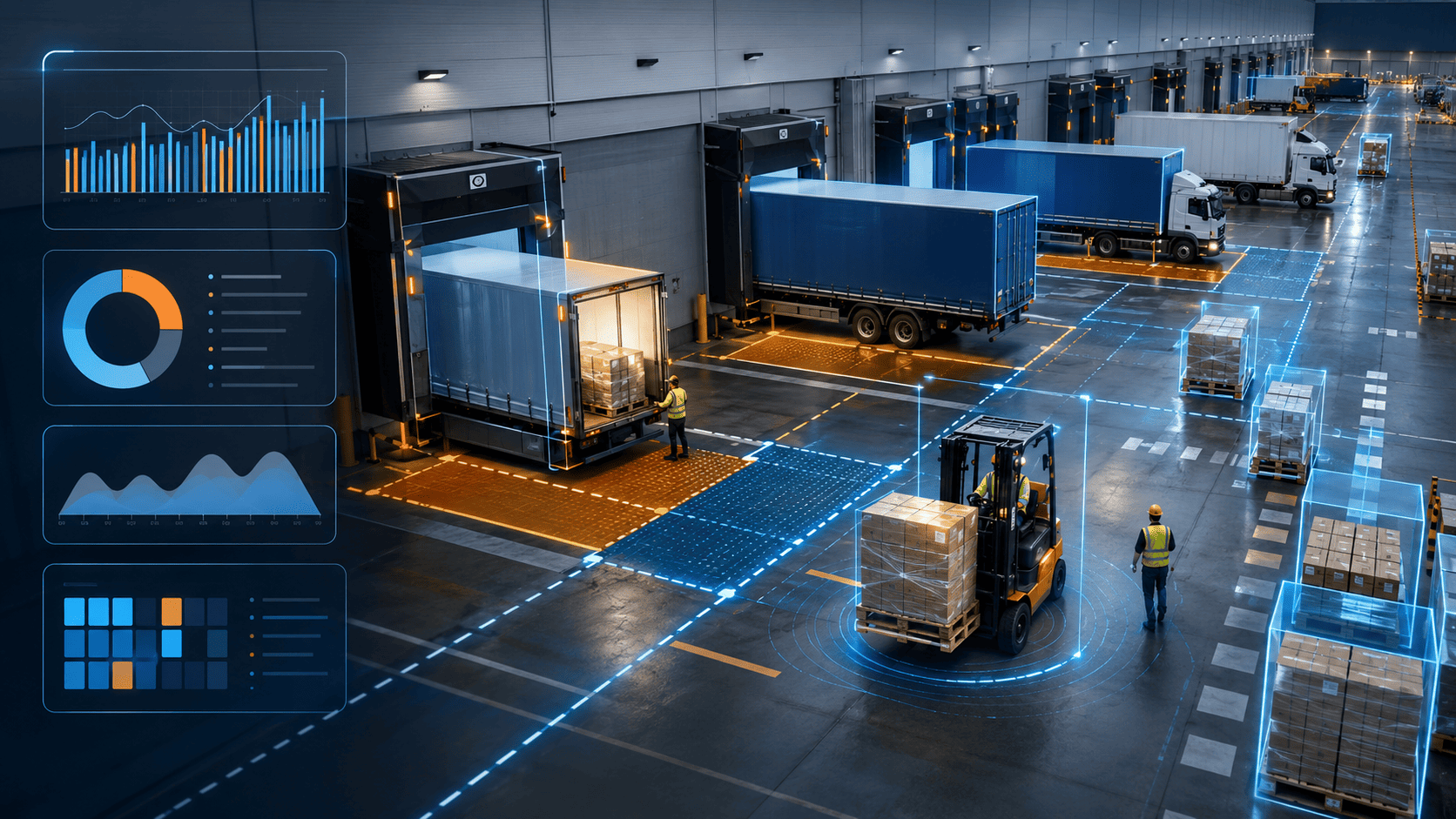 Docks
DocksDock occupancy, vehicle waiting, gate queues, unloading, loading and idle time.
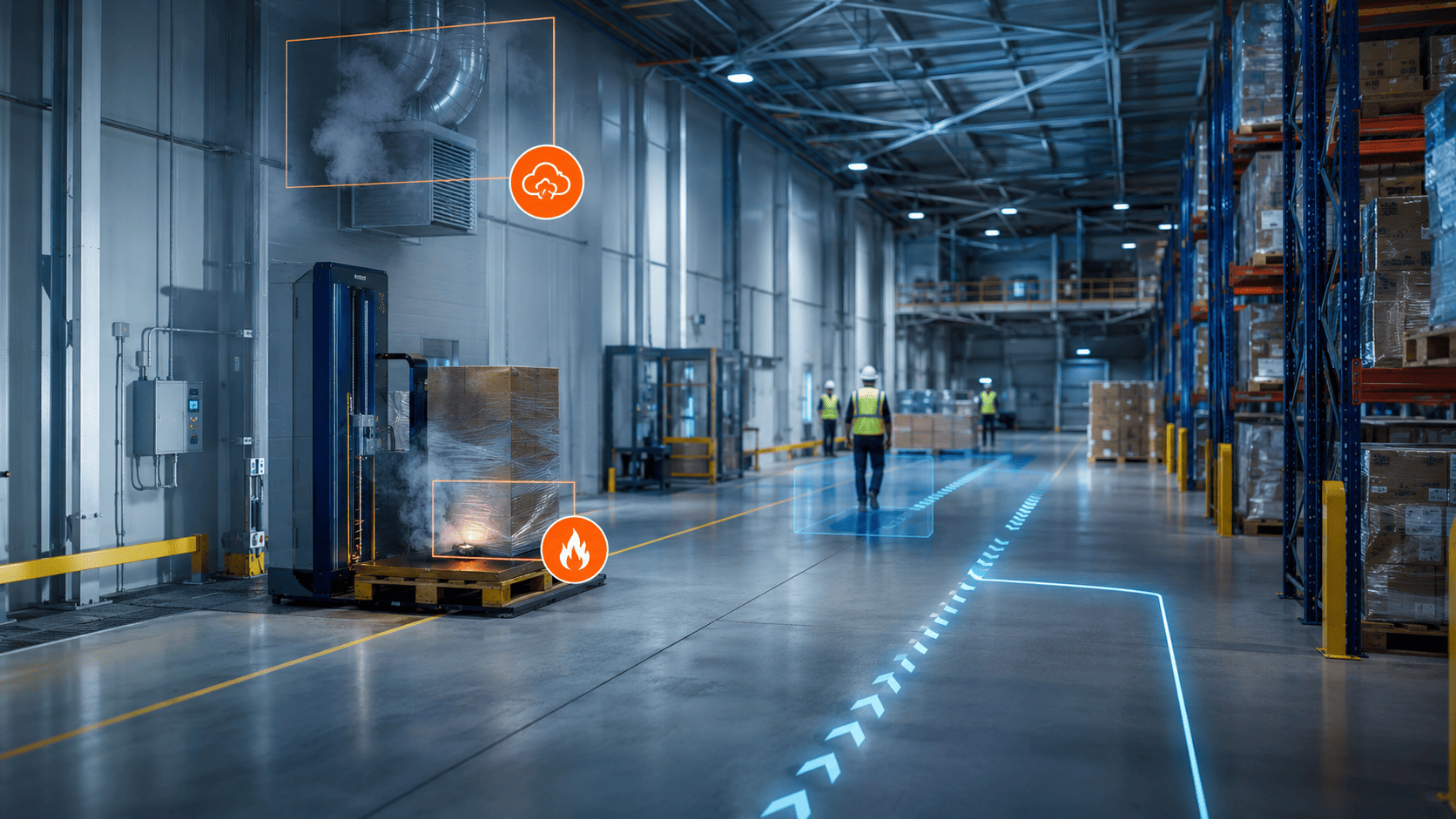 Fire / smoke
Early signs of smoke, open flame, overheating, blocked exits and hazardous zones.
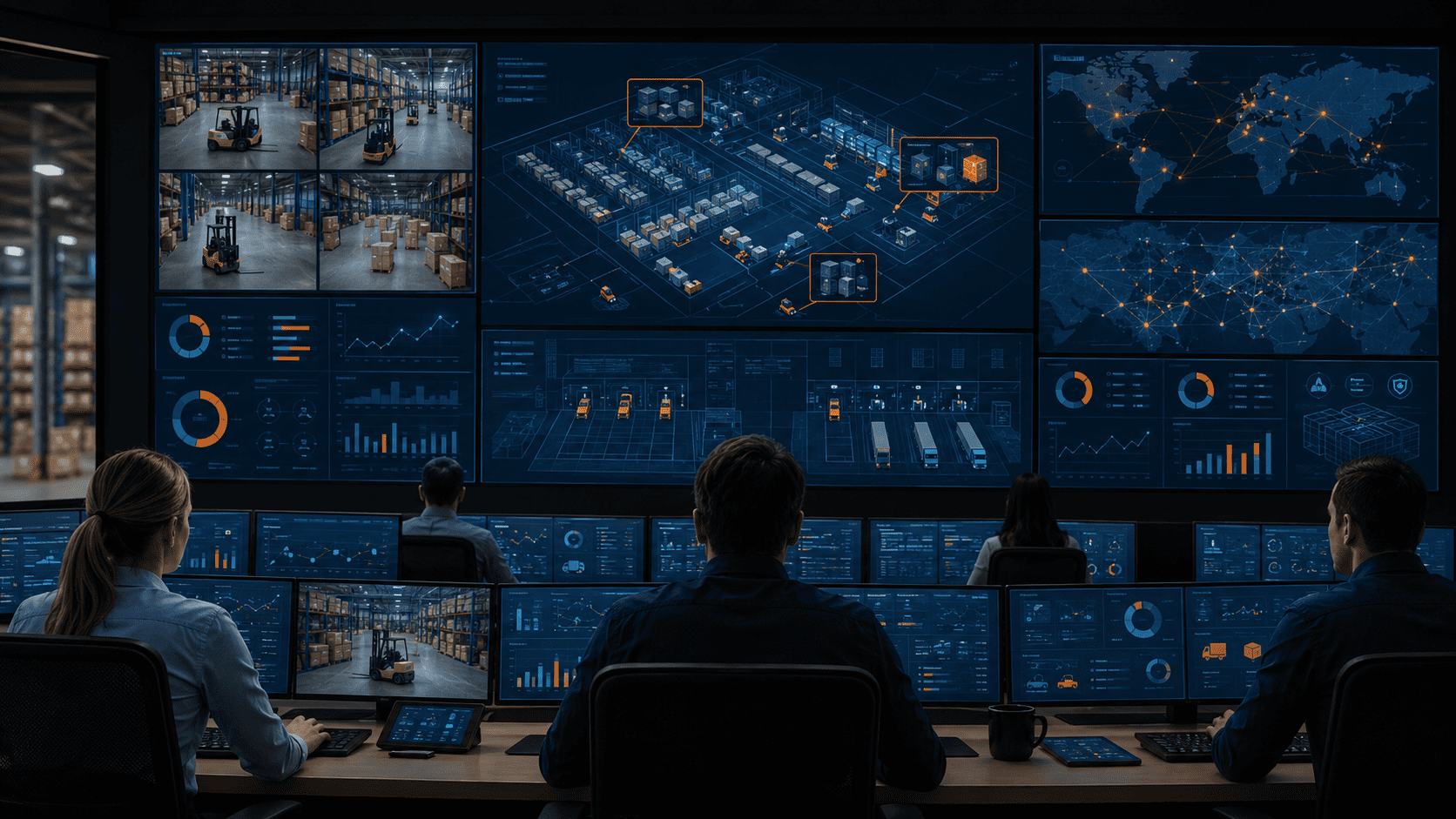 Control
Events, zone statuses, vehicles, docks, safety, archive and KPI across a network of sites.
The platform analyzes video streams, links events to zones and operations, then sends data to the dispatcher, safety team, warehouse manager or WMS/BI.
Accounting systems do not always show the real state of floor areas, racks and temporary zones. Video analytics sees pallets, boxes, blocked passages and zone overload in real time.
Rules can be set for each zone: what may be stored, where pallets are forbidden, where a passage must stay clear and when inspection is needed.
Vehicle video control helps reduce risks at intersections, docks, narrow aisles and picking areas. The system records dangerous proximity and deviations from permitted routes.
Events can be used for personnel training, near-miss investigation and safe warehouse traffic logic.
If a pallet is not where WMS says it should be, video analytics helps find the last visual trace: where it appeared, who moved it and which zone it passed through.
This is useful for claims, packaging damage, missorting, wrong shipment and control of responsible operations.
Warehouse safety depends on discipline in the zone: helmets, vests, footwear, routes, presence in hazardous areas and work near vehicles.
The system does not replace responsible staff, but gives them objective events, frames and statistics for preventing violations.
A logistics site often loses time not inside racks, but at the boundary between warehouse and transport. Video analytics shows gate occupancy, vehicle waiting, start and finish of operations.
Events can be sent to the dispatcher, YMS/TMS or shift report.
Warehouses contain combustible packaging, pallets, vehicles, charging areas and technical rooms. Early visual indicators matter: ceiling smoke, local ignition, haze, overheating and blocked exits.
Video analytics complements fire automation with visual confirmation and helps check the event faster by camera and zone.
When there are multiple sites, a single camera is not enough. Management needs a comparable view across the network: where docks are overloaded, where near-miss events occur, where storage zones are violated and where cargo is lost.
The dashboard combines events, video frames, zone statuses, KPI, reports and accounting system integrations.
Results depend on layout, cameras, WMS and procedures. During the pilot we capture the baseline, enable 3–5 scenarios and compare results using the same metrics.
One system gives different views: shift managers need on-site events, logistics needs docks and cargo, HSE needs risks and violations, head office needs site comparison.
There is no need to replace CCTV or accounting systems. Scenarios can run on current cameras and gradually connect to WMS, TMS, ERP, BI and notification channels.
RTSP/ONVIF, NVR/VMS, edge or server processing, support for already installed cameras.
Link video events to zones, trips, operations, pallets, docks and accounting statuses.
Events for shift manager, HSE, security and logistics via UI, email, Telegram or webhook.
Export aggregated metrics by zones, vehicles, docks, personnel, safety and network sites.
We start with camera layout, zones and procedures: storage, vehicles, cargo, personnel, docks, fire and smoke. After the pilot, only measurable scenarios remain.