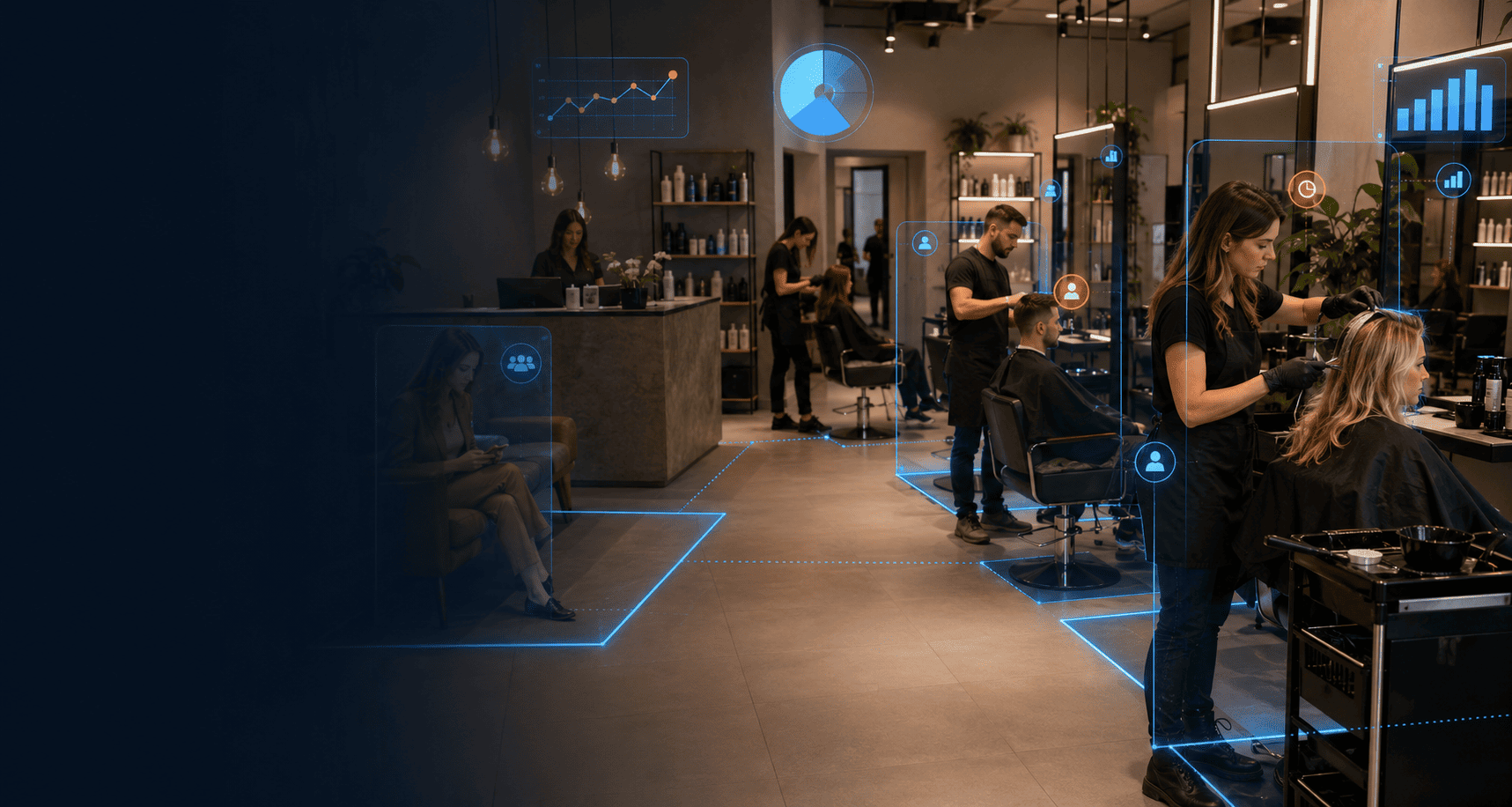
Booking is not the fact
A client may be late, not arrive, wait for the receptionist or start the service later than scheduled.

Cameras, events, evidence frames and KPIs for appointments, arrivals, stylist workload, waiting time, service standards, product shelves and safety.
A booking system shows the plan, but it does not always show actual arrival, waiting, stylist workload, idle time, service standards and causes of disputes.
A client may be late, not arrive, wait for the receptionist or start the service later than scheduled.
Some workstations are overloaded while others sit idle, and management sees the issue only at the end of the day.
Peak hours, reception delays and waiting area queues directly affect repeat visits.
Events and frames are needed: greeting, consultation, zone order, disputed case and safety.
Modules can be launched step by step: first traffic and waiting, then stylist workload, service standards, retail shelves, safety and a single control center.
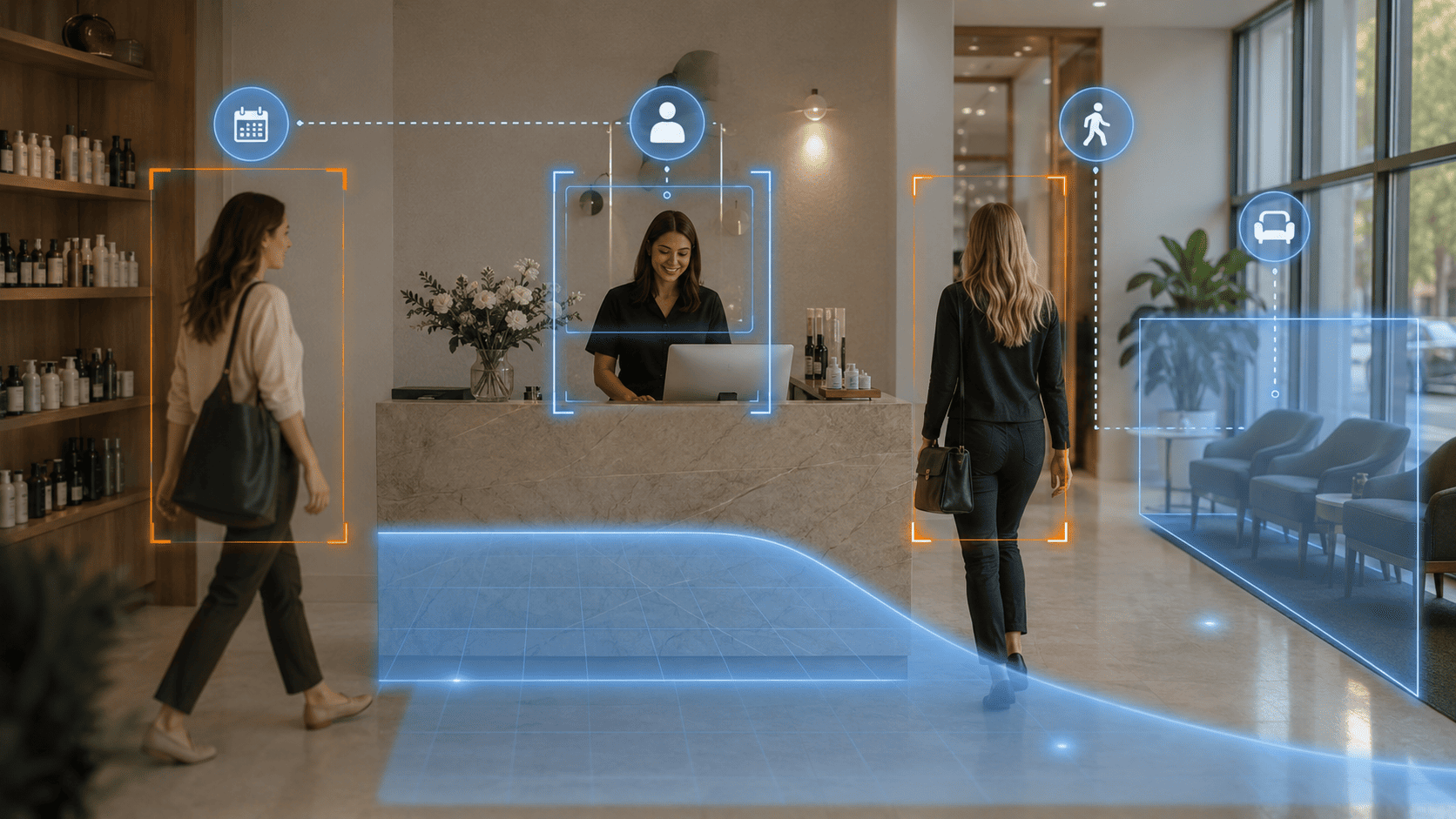 Client arrival
Booked visits, walk-ins, receptionist waiting time, disputed cases and evidence frames.
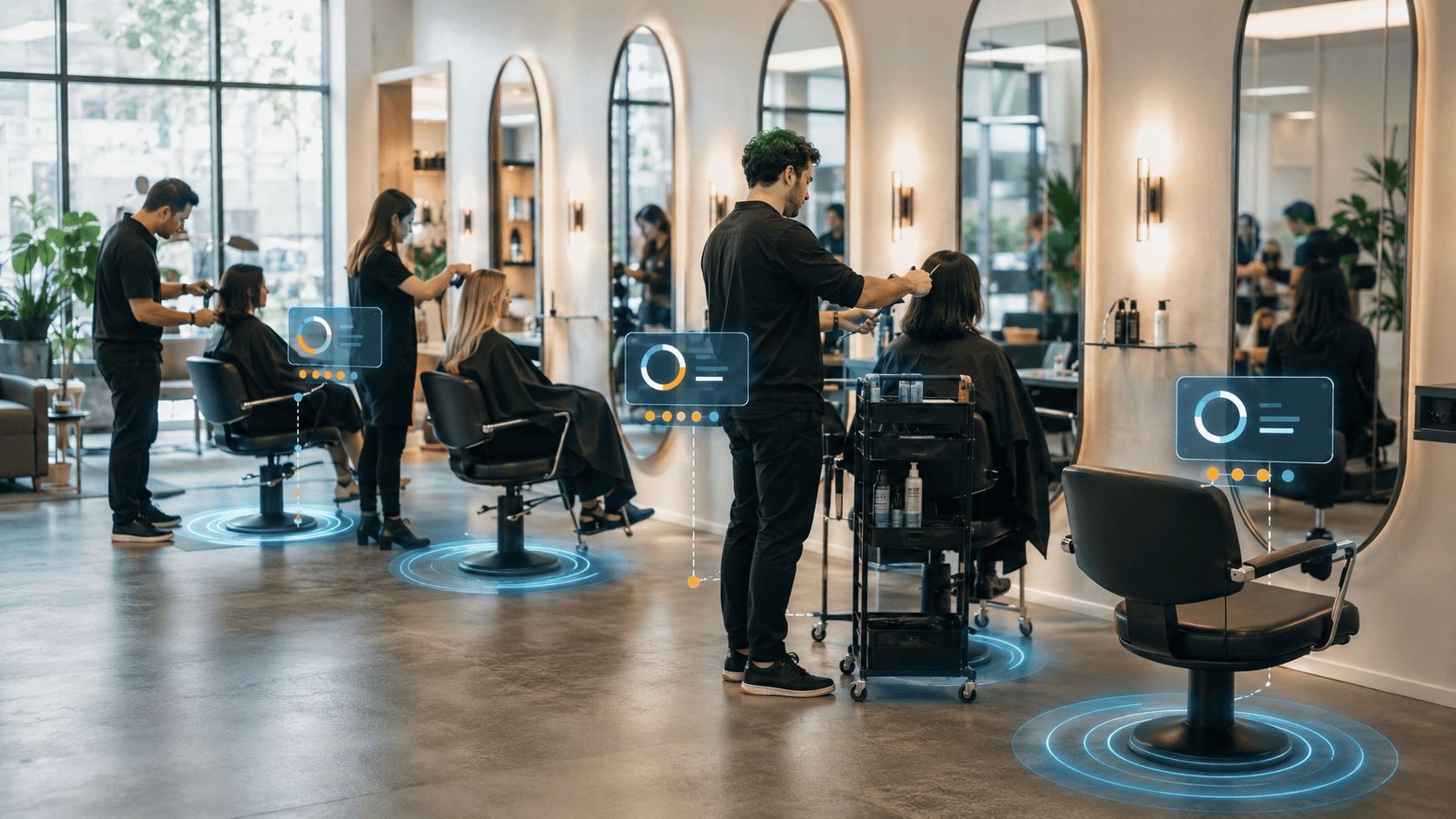 Chairs and stylists
Chair occupancy, service duration, idle time, overload and actual shift workload.
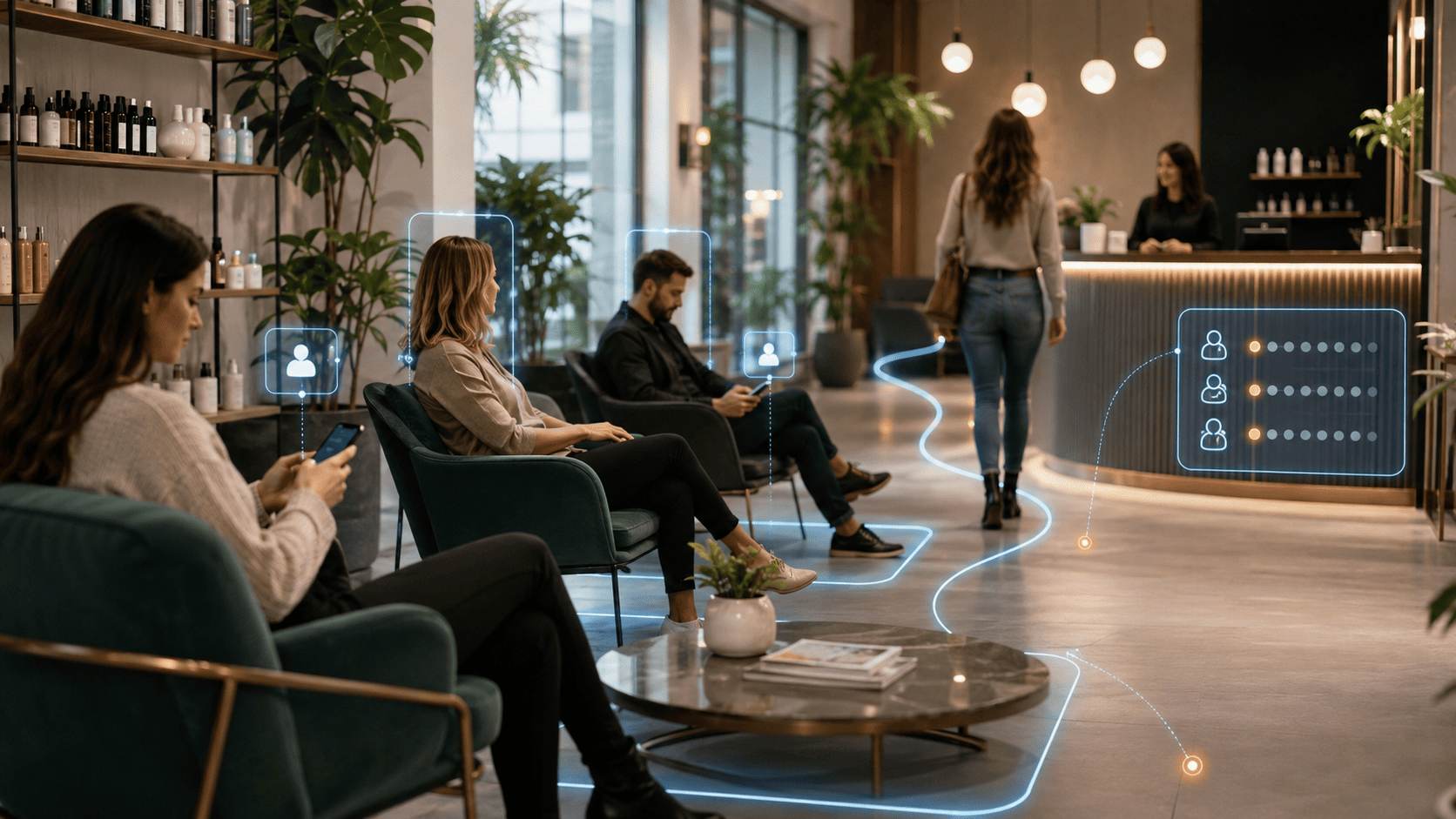 Waiting area
Queue length, waiting time, peak hours, area overload and customer journey.
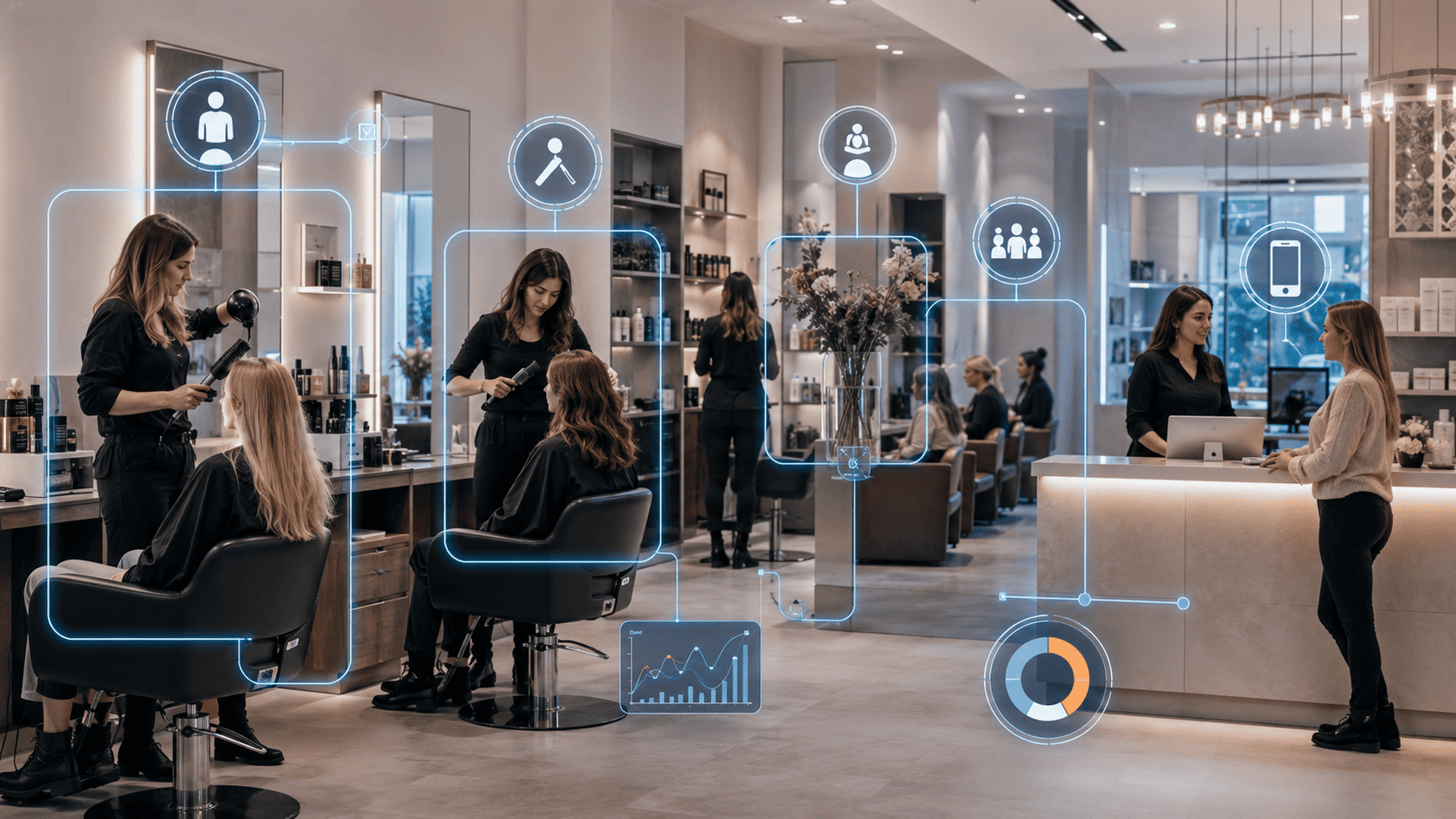 Service standards
Presence, work zone, client greeting, phone use, service sequence and shift discipline.
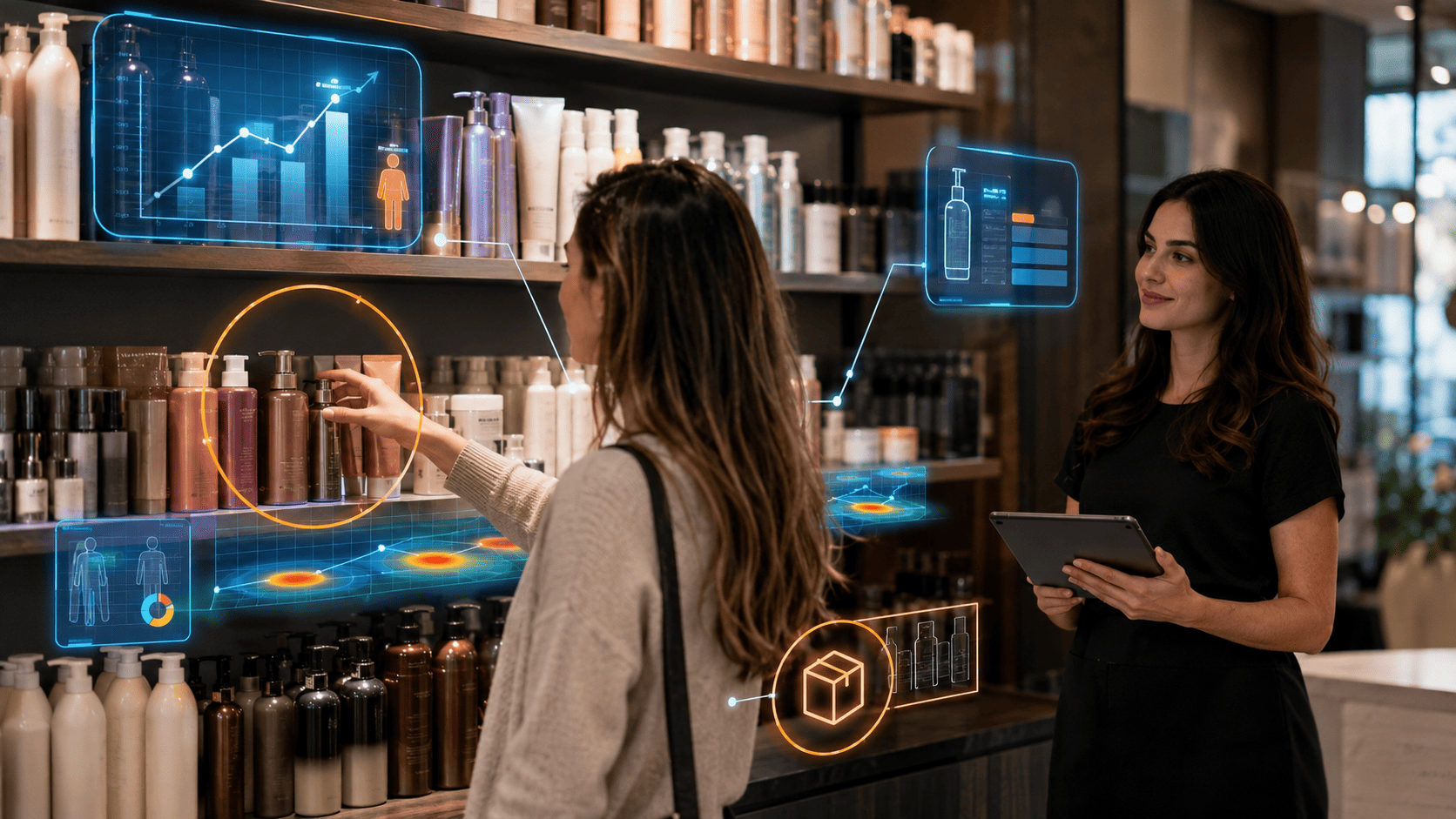 Post-service sales
Shelf interest, consultation, empty spots, display quality and link to stylist recommendations.
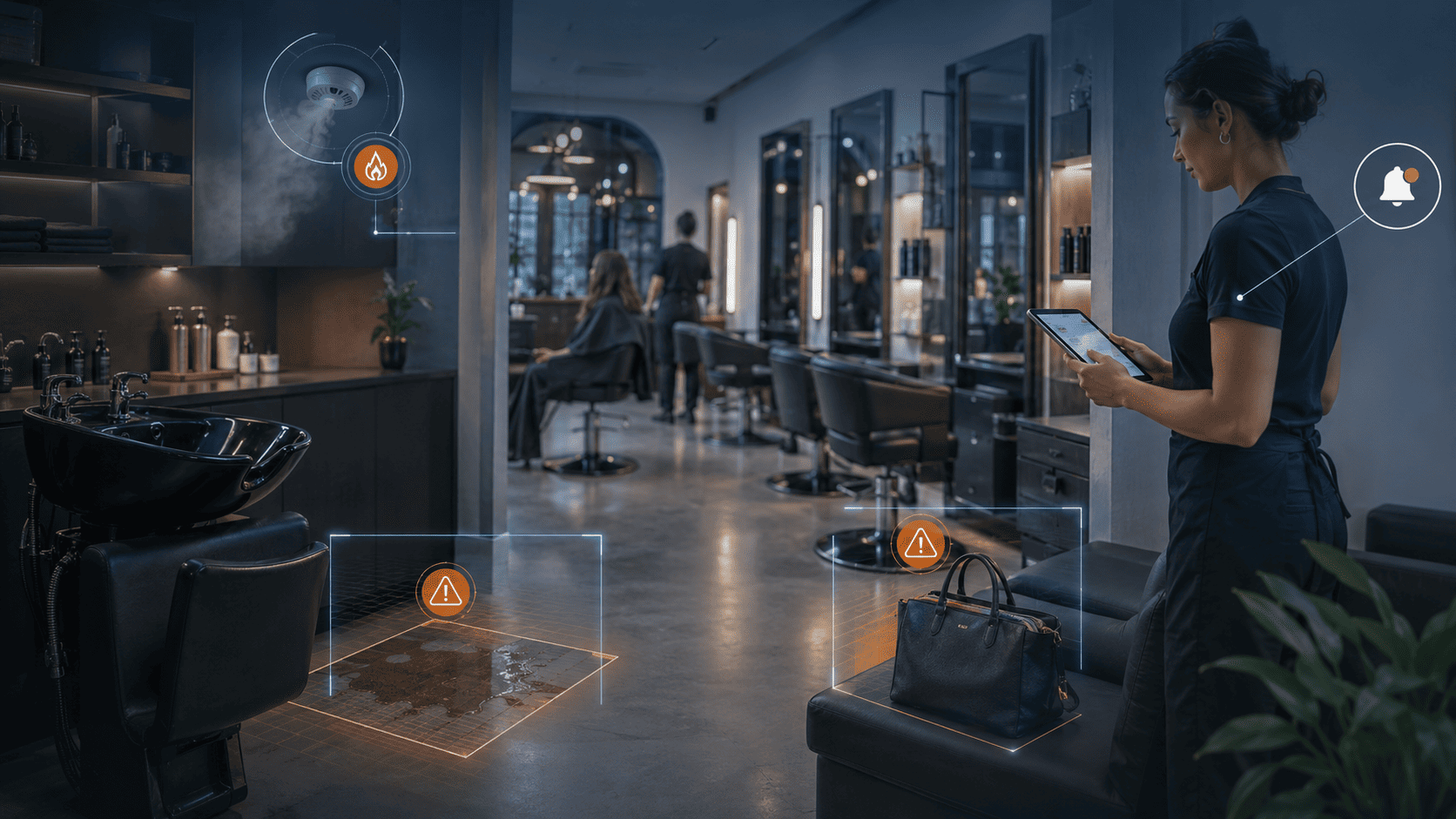 Incidents and risks
Fire, smoke, wet floor, unattended objects, conflict cases and notifications.
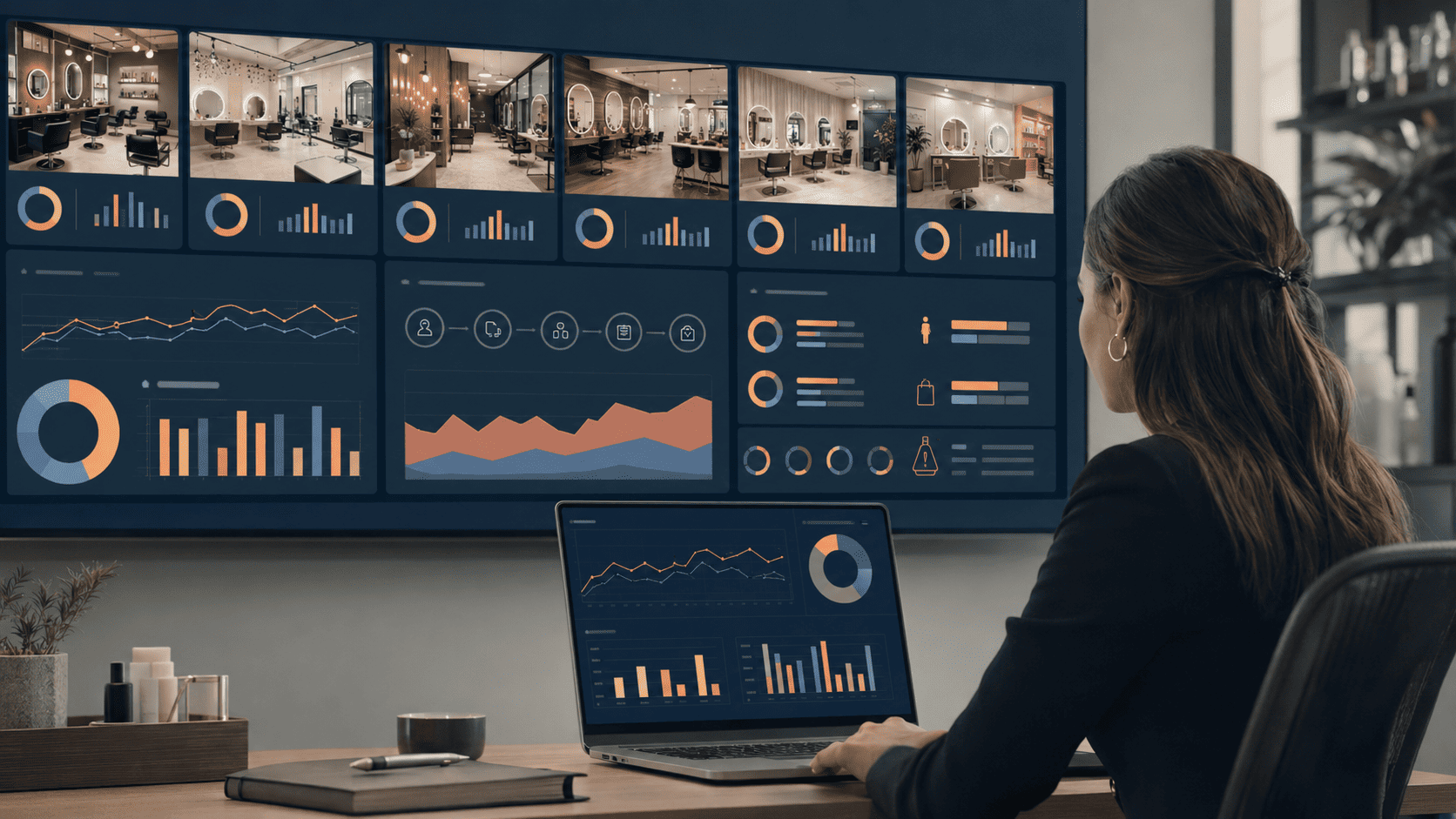 Salon network
Dashboards by branches, stylists, zones, waiting time, events, sales and KPIs.
The page focuses on operational use cases: what happens on the floor, how fast clients are served, where waiting, idle time and disputes appear.
The system compares entrance and reception traffic with the schedule: who arrived on time, who was late, who is waiting for the receptionist and where a disputed case appeared.
This shows not just a CRM slot but the real customer journey: entrance, greeting, waiting, service start and visit completion.
Video analytics shows which chairs are occupied, where a client is already being served, where a stylist is waiting for the next client and where a service runs longer than expected.
For a chain this is especially useful: branches can be compared by actual workstation workload rather than subjective reports.
In salons waiting may look like a small issue, but it directly affects repeat visits and customer ratings. The system records queue length, waiting-zone overload and time before service starts.
Notifications help the receptionist redistribute the flow, warn the client or involve an available stylist in time.
The module does not replace the manager, but provides facts: who is in the work zone, how clients are greeted, when a workstation is left unattended and where the process order is broken.
This is useful for training, internal control and objective review of disputed cases without watching hours of video.
In salons a meaningful part of margin can come from care products. The system shows which shelves attract attention, where consultation is needed and which zones underperform.
Data can be compared with stylist recommendations and actual sales to improve display and team training.
A salon includes chemicals, electrical devices, hot tools, water near wash stations and dense customer traffic. Safety is therefore not a secondary scenario.
The system detects early signs of fire and smoke, wet floors, unattended objects, conflicts and other events that require fast notifications.
For a chain it is important to see not separate cameras but comparable metrics: traffic, waiting, stylist workload, reception work, events, shelf sales and safety for every branch.
Dashboards help find best practices, weak points and branches that need training, shift reinforcement or schedule changes.
In the pilot we connect several zones and capture baseline values: waiting time, stylist workload, idle time, events and customer journey quality.
Each role sees its events: queue, booking, stylists, customer journey, service, retail shelf, safety and reports.
No need to replace video surveillance. Scenarios can connect to existing IP cameras, VMS, booking CRM, BI and notification channels.
RTSP/ONVIF, NVR/VMS, edge or server processing, work with already installed cameras.
Matching actual arrival, waiting and service start with the schedule and client record.
Events for receptionist, manager, security and network team via interface, email, Telegram or webhook.
Export metrics by branches, stylists, zones, waiting time, retail shelf, events and safety.
We start with the camera map, zones, booking CRM and key scenarios. Then we launch 3–5 modules, capture baseline metrics and keep only what produces measurable value.